


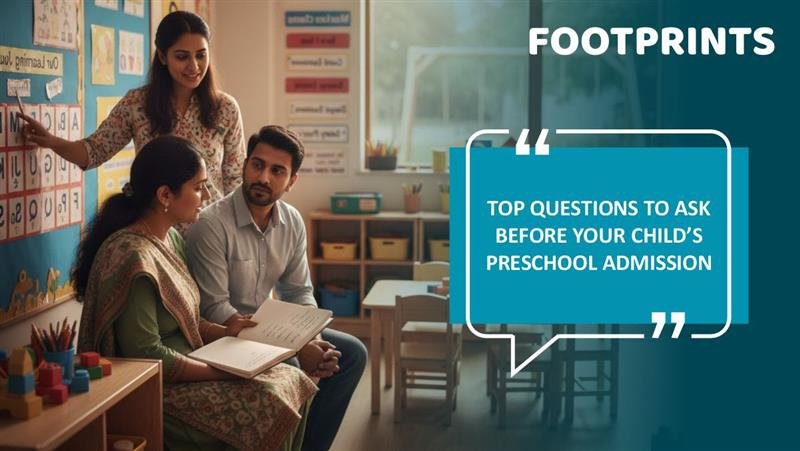
Choosing a pre-school is no longer just about distance and fees. Parents also want clarity on teaching methods, classroom management, safety, hygiene, and parent updates.
If you are visiting a pre-school in Chennai, use the questions below to understand how the school works on a normal day. Clear answers help you compare options in the real world, not only in marketing.
What Type of Learning Does the Pre-school Follow?
Start with the learning method. The school should explain how children learn through play, stories, art, music, and movement, not only through worksheets. Ask how activities build early language and number readiness in an age-appropriate way, without pressuring children into formal academics too soon.
How Many Children Are There in One Class?
Class size plays an important role in how much attention each child receives during the day. Parents should ask about the number of children per class and how many teachers and support staff are present to support them. Smaller groups can make it easier for children to participate, follow routines, and settle into activities. It also helps staff observe behaviour, encourage interaction, and respond to individual needs in a timely manner.
What Training Do Teachers Have?
Teachers shape a child’s experience every day. Ask about early childhood qualifications and the training teachers receive after joining. It helps to know whether training covers child behaviour, communication, emotional support, and inclusion. You can also ask how long teachers usually stay at the school, because stability supports smoother adjustment.
How Does the Pre-school Keep Children Safe?
Safety measures should be clearly explained before enrolment. Parents exploring preschools in Hyderabad can ask about entry procedures, supervision during activities, emergency preparedness, and how staff are trained to respond calmly and responsibly to everyday safety concerns.
What Is a Typical Day Like for Children?
Ask for a sample timetable and how time is balanced between free play, group learning, outdoor movement, meals, and quiet time. Check how transitions are handled, since rushed transitions often upset young children. Ask whether outdoor time is daily and what alternatives exist when the weather limits play. A good routine includes buffer time so children can move calmly.
How Are Cleanliness and Health Managed?
Health routines should be simple and consistent. Ask how often classrooms, toys, washrooms, and eating areas are cleaned, and what handwashing practices are followed. Clarify the policy for fever, contagious illness, and return to school after sickness. If meals are provided, ask how food is prepared, stored, and served, and how allergies are handled.
What Is the Right Age and What Documents Are Needed?
Confirm the age eligibility for each level and the cut-off date used for admissions. Ask for the exact document list, including birth proof and address proof. If the school requires immunisation details or basic medical forms, request that requirement in writing.
What Are the Fees and What Do They Include?
Fees should be transparent. Ask for a written breakdown of charges and what is included in tuition. Confirm whether books, learning kits, meals, transport, events, or day-care hours are charged separately. Also, check the payment schedule, late fee rules, and refund or withdrawal terms.
What Does the School Expect Parents to Provide?
Different schools expect different things from families. Ask what items must be sent daily or weekly, such as snacks, water, spare clothing, or hygiene supplies. Also, clarify expectations around punctuality, attendance, and parent meetings. When expectations are clear, it is easier to match home routines with school routines.
How Does the Pre-school Communicate With Parents?
Good communication reduces stress for parents and children. Ask how updates are shared, such as daily notes, an app, or scheduled meetings. Check how often feedback is given on adjustment and development, and who you should contact for concerns. It also helps to know how quickly the school responds when an issue is raised.
Conclusion
These ten questions help you judge how a pre-school runs in real life. When you have clarity on learning methods, class size, teacher training, safety, hygiene, routines, and communication, you can compare schools with confidence. The same approach works well when you shortlist pre-schools in Hyderabad, because it focuses on daily standards that affect a child’s comfort and learning.