


Hiring teams today face a complex challenge: selecting candidates who can perform well in their current roles and grow as the business evolves. With rapid automation, cross-functional expectations, and global collaboration becoming the norm, organizations need more than résumés and unstructured interviews to make accurate hiring decisions.
This is why an aptitude test for recruitment has become one of the most widely adopted tools for predicting candidate potential, job readiness, and long-term success. An aptitude test from providers like Mercer assessments helps employers evaluate reasoning ability, problem-solving skills, decision-making capacity, learning agility, and cognitive strength.
These competencies directly influence workplace performance. This blog explains when organizations should use an aptitude test in the hiring funnel and how it ensures fair and predictive recruitment.
Understanding the Purpose of Aptitude Testing in Hiring
An aptitude test evaluates a candidate’s inherent or developed ability to perform specific tasks. Unlike domain tests, aptitude measures skills that transfer across roles and industries, such as logical thinking, numerical ability, data interpretation, cognitive speed, verbal reasoning, and learning agility.
Organizations typically use aptitude tests to:
- Predict how quickly candidates learn new skills
- Understand how they respond to unfamiliar tasks.
- Evaluate analytical and decision-making abilities.
- Compare job-seekers based on standardised scoring.
- Reduce subjective hiring errors.
Signs You Should Use an Aptitude Test for Recruitment
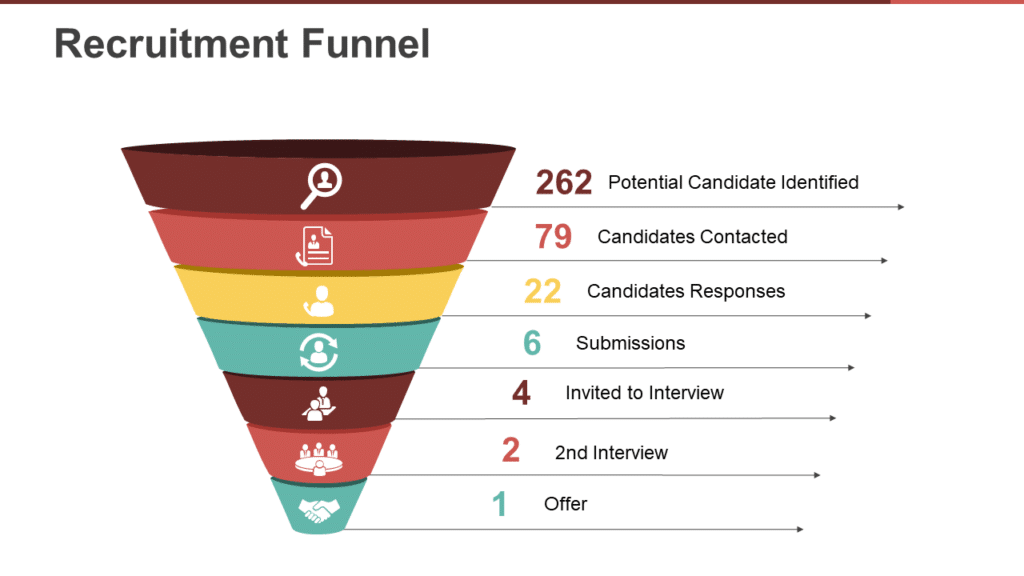
While aptitude assessments are applicable across industries and job levels, their impact is maximised when used at the correct points in the hiring funnel. Below are the stages where they deliver the strongest value.
- When Screening Large Applicant Pools
In high-volume hiring, such as campus recruitment or entry-level hiring, organizations often receive thousands of applications for a limited number of roles. An aptitude test for recruitment quickly filters candidates based on core cognitive skills without relying on subjective résumé screening.
This is especially useful for:
- Campus placements
- Internship hiring
- Graduate trainee programs
- Walk-in drives
- High-volume customer service roles
Since aptitude tests are time-bound, standardized, and secure, they help identify the most job-ready individuals before deeper evaluation.
- When the Role Requires Strong Cognitive and Analytical Skills
Roles that demand analytical thinking, rapid learning, or structured problem-solving benefit significantly from early aptitude screening. These include:
- Finance and accounting
- Consulting and strategy
- Operations and supply chain
- Technology and IT services
- Data-driven business roles
Tests such as logical reasoning, numerical reasoning, and cognitive speed assessments help determine whether candidates can handle data-heavy tasks, adapt to complexity, and make sound decisions under pressure.
- Before Conducting Behavioral or Leadership Interviews
Many organizations integrate an aptitude test for recruitment before the interview stage. This ensures that only candidates with strong foundational capability move forward to behavioural or leadership assessments.
This layered approach saves interviewers’ time and improves hiring outcomes by:
- Eliminating unqualified applicants early
- Providing interviewers with data to customize their questions
- Ensuring that candidates reaching the final rounds are capable and trainable
Pairing aptitude scores with a behavioral assessment from providers like Mercer assessments also produces a more complete talent picture, cognition plus personality.
- Hiring for Roles with Learning Agility Requirements
Modern roles evolve quickly. Job descriptions change, technologies upgrade, and employees must consistently reskill. A candidate’s ability to learn fast is often more important than their current skill level.
Learning agility assessments, which fall under aptitude, measure traits such as:
- Curiosity
- Adaptability
- Openness to change
- Planning and organisation
- Speed of understanding new concepts
Using aptitude tests for these roles helps ensure that new hires remain effective and future-ready.
- Evaluating Freshers with Limited Work Experience
For early-career candidates, résumés are limited indicators of ability. Grades alone do not reflect problem-solving capacity or practical reasoning skills.
An aptitude test for recruitment becomes the fairest and most predictive method because it evaluates:
- Analytical reasoning
- Verbal comprehension
- Abstract thinking
- Spatial awareness
- General intelligence
This ensures equal opportunity for candidates from diverse educational backgrounds.
- When You Need to Standardize Hiring Across Multiple Locations
Organizations hiring across several regions, time zones, or campuses often find inconsistencies in hiring quality. Standardized online aptitude tests allow every applicant to be evaluated using the same structure, difficulty level, and scoring.
Advanced features include:
- AI-enabled proctoring
- Safe browser modes
- Timed assessments
- Location-agnostic test delivery
- Multi-language options
This guarantees fairness across large geographical hiring pools.
- Predict On-job Performance More Accurately
Research consistently shows that cognitive ability is one of the strongest predictors of workplace performance. An aptitude test for recruitment helps employers anticipate:
- Speed of decision-making
- Accuracy in tasks
- Problem-solving quality
- Efficiency under pressure
- Adaptability in changing environments
Combined with role-based technical testing, aptitude exams significantly improve hiring accuracy and long-term performance outcomes.
- Role-Specific Cognitive Indicators
Some jobs require specific aptitude strengths. For example:
- Sales roles benefit from verbal and critical reasoning
- Analytics roles rely heavily on numerical reasoning.
- Operational jobs require quick data interpretation.
- Customer-facing positions need communication clarity.
- Engineering roles benefit from logical and abstract thinking.
Customizable test batteries allow hiring teams to match assessment types with job requirements.
Make Aptitude Testing a Strategic Part of Your Hiring Funnel
An aptitude test for recruitment becomes indispensable when employers need a fair, scientific, and scalable method to identify job-ready talent. If screening large applicant pools, predicting on-job performance, standardizing multi-location hiring, or supporting behavioural interviews, aptitude tests bring precision and consistency to the hiring funnel.
When paired with a structured behavioural assessment, they help organizations build well-rounded evaluations that combine cognitive ability with personality insights. As hiring demands grow and roles become more dynamic, organizations that use aptitude tests strategically will make faster, more confident, and more effective talent decisions.
This disciplined approach strengthens workforce quality and supports long-term organizational success at every level.