


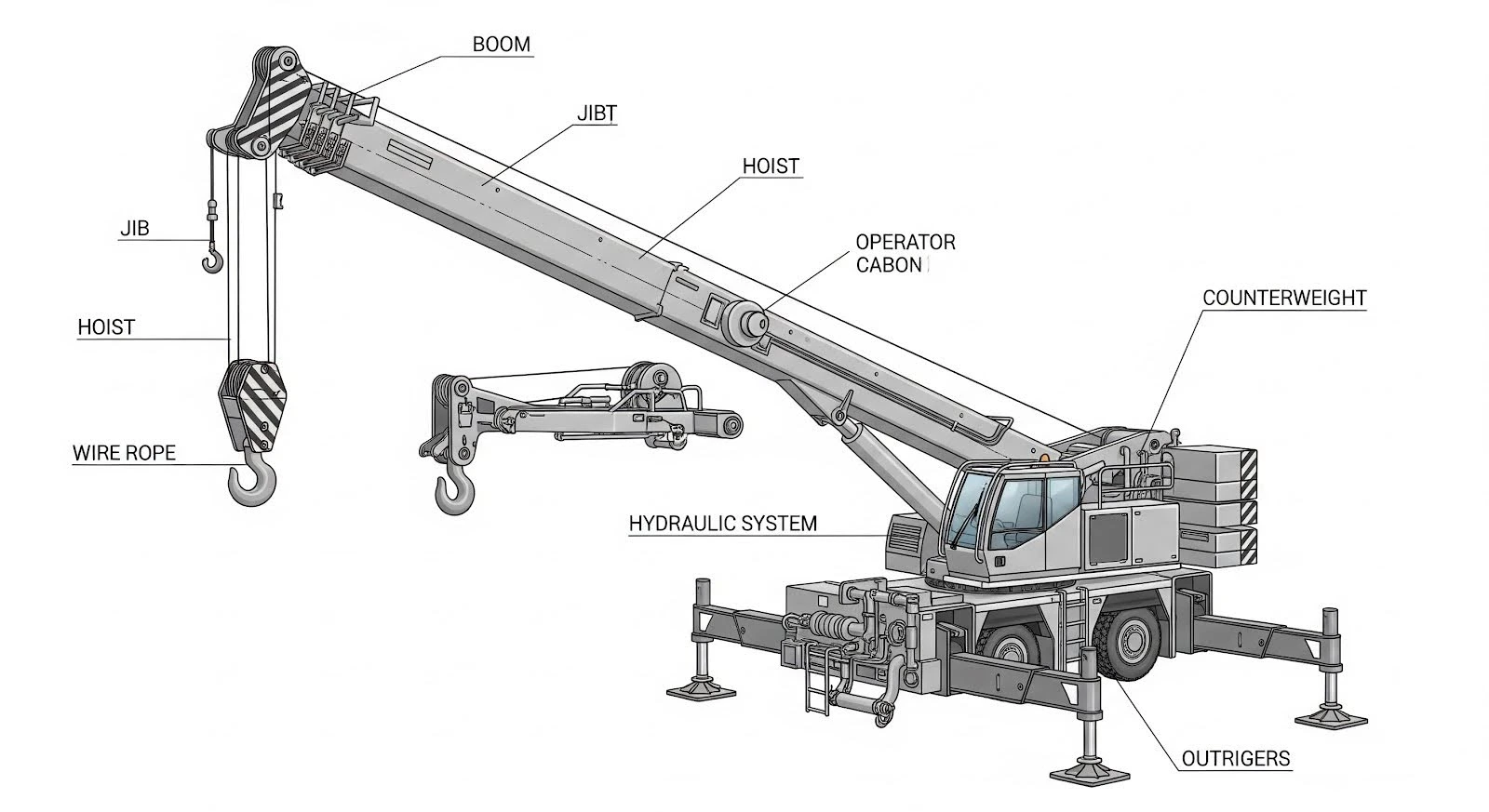
Cranes do some of the hardest work in construction, manufacturing, shipping, and heavy industry. They lift steel, concrete, machinery, containers, and other oversized loads that would be impossible to move by hand. Yet for all their strength and scale, cranes rely on precision. A lift only goes smoothly when every major and minor component works exactly as it should.
That is why understanding crane parts matters. Whether you are responsible for maintenance, equipment purchasing, jobsite planning, or general operations, knowing how the main components function can help you make better decisions. It can also reduce downtime, improve safety, and support longer equipment life.
A crane is not just one machine. It is a system of interconnected parts that must perform under stress, often in changing weather, on uneven ground, or under tight timelines. When one part wears out, becomes misaligned, or is poorly maintained, it can affect the entire system. In some cases, it can also create serious safety risks.
For that reason, learning the basics of crane components is useful not only for technicians and operators, but also for supervisors, buyers, and project managers. A stronger understanding of the machine helps people ask better questions, recognize early warning signs, and plan maintenance more effectively.
This article takes a closer look at the core parts of a crane, how those parts work together, what affects their performance, and why proper inspection and replacement matter more than many people realize.
Why Crane Parts Deserve Close Attention
Heavy equipment is often judged by what it can lift or how far it can reach. Those specifications matter, but they only tell part of the story. Real-world performance depends just as much on condition, reliability, and the quality of the parts supporting the machine.
Every lift places stress on multiple systems at once. The boom must hold position. The hoist must raise and lower correctly. The wire rope must remain intact. The hydraulic or mechanical systems must respond smoothly. The operator depends on all of these parts working together in real time.
That is why crane parts should never be treated as interchangeable afterthoughts. The quality, fit, and condition of each component directly affect safety and efficiency.
Small Failures Can Become Big Problems
A worn sheave, a damaged hook latch, or a leaking hydraulic seal may seem minor at first. But in crane operation, small issues rarely stay isolated. They usually place more strain on surrounding parts, which can lead to faster wear and unexpected failure.
In busy operations, that often means unscheduled downtime. In more serious cases, it can lead to damaged loads, job delays, or dangerous incidents on site.
Maintenance Is More Than a Compliance Task
Regular inspection is sometimes treated like paperwork or routine process. In truth, it is one of the most practical ways to protect the crane and the people working around it. Proper attention to crane components helps extend machine life, support reliable lifting, and reduce the likelihood of costly emergency repairs.
The Main Structural Parts of a Crane
Although crane designs vary by type, many share the same major structural components. These form the backbone of the machine and provide the framework that supports lifting operations.
The Boom
The boom is one of the most visible and important crane parts. It is the long lifting arm that extends outward and upward to move loads into position. Depending on the crane type, the boom may be fixed, telescopic, or lattice-style.
A telescopic boom is common in mobile cranes and can extend or retract to adjust reach. A lattice boom, often used in crawler cranes and larger lifting applications, is built from a framework of steel sections that offers strong load support while reducing overall weight.
The boom handles immense stress, so regular inspection for cracks, corrosion, deformation, or damaged welds is essential.
The Jib
The jib is an extension attached to the boom that provides additional reach. It helps move loads into tighter or more distant spaces where the main boom alone may not be enough.
In some applications, the jib adds flexibility and improves lift positioning. But because it changes the crane’s geometry and lift characteristics, it must be matched carefully to the machine’s design and lifting limits.
The Mast or Tower Section
On tower cranes and some specialized lifting systems, the mast or tower forms the vertical support structure. It allows the crane to reach significant heights while keeping the lifting mechanism stable.
This part of the crane must handle both vertical loads and wind forces. Connections, bolts, and section alignment are especially important here because even small structural issues can affect overall stability.
Lifting and Load-Handling Components
The crane’s structural frame gives it shape and strength, but the lifting components do the actual work of moving the load.
The Hook
The hook is where the load connects to the crane. It may seem simple, but it is one of the most critical crane components in the entire lifting process. Hooks must be strong enough to support the rated load while also resisting twisting, cracking, and wear.
A hook usually includes a safety latch to reduce the risk of the rigging slipping out during movement. If the latch is missing or damaged, that alone can create a serious hazard.
Hooks should be inspected for throat opening, wear, bending, and visible signs of stress. Even a slight deformation can indicate the part has been overloaded or compromised.
The Hoist
The hoist is the mechanism that raises and lowers the load. In many cranes, it includes the drum, wire rope, motor, and related control elements. The hoist must respond precisely because lifting is not only about power. It is also about control.
A smooth hoist system helps prevent sudden movement, load swing, and unnecessary shock to the machine. Any hesitation, slipping, or irregular sound should be investigated quickly.
Wire Rope or Hoist Rope
Wire rope is one of the most heavily stressed crane parts and one of the most frequently inspected. It carries the load during lifting and lowering, often while bending repeatedly over sheaves and drums.
Over time, wire rope can develop broken wires, flattening, corrosion, kinks, or internal damage. Because of this, it must be checked regularly and replaced before wear reaches a dangerous level.
Proper lubrication and correct reeving are also important. A high-quality rope can still fail early if it is poorly installed or neglected.
Sheaves and Drums
Sheaves guide the wire rope and help change its direction during lifting. The drum stores and winds the rope as the hoist operates. Both must remain in good condition to reduce abrasion and uneven wear.
Groove wear, misalignment, and poor lubrication can shorten rope life significantly. Since these components work so closely together, they are often inspected as part of the same maintenance routine.
Motion, Power, and Control Systems
A crane does not only lift. It also swings, travels, telescopes, and positions loads with careful control. These movements depend on several power and motion systems working together.
Hydraulic Systems
Many cranes rely on hydraulic systems to power boom extension, lifting movements, steering, and outriggers. Hydraulic cylinders, pumps, hoses, valves, and seals all play a role.
Hydraulic crane parts are especially sensitive to leaks, contamination, and pressure imbalance. A small hydraulic issue can quickly affect machine responsiveness and lift performance.
Routine fluid checks, seal inspections, and hose condition reviews help prevent larger failures later.
Motors and Gearboxes
Electric or hydraulic motors often drive winches, swing mechanisms, and travel systems. Gearboxes help transfer power efficiently while controlling speed and torque.
These components require proper lubrication, alignment, and monitoring. Overheating, unusual noise, and vibration may signal wear that should be addressed before the problem spreads.
Swing Mechanism
The swing mechanism allows the crane to rotate and place loads precisely. This system is especially important in tower cranes, crawler cranes, and larger mobile cranes where accurate positioning matters.
Worn bearings, damaged gears, or irregular braking can affect smooth operation and increase the risk of load swing. Because this part of the crane manages directional control, it should never be overlooked during inspections.
Stability and Support Components
Lifting safely depends not only on the upper structure, but also on how well the crane is supported during operation.
Outriggers
Outriggers are extendable supports used on many mobile cranes to improve stability during lifting. They widen the machine’s footprint and help distribute weight more evenly.
Outrigger pads, cylinders, and locking systems all need to be in sound condition. A crane with compromised outrigger performance may appear stable at first but become dangerous under full load.
Counterweights
Counterweights balance the crane by offsetting the load being lifted. They are essential to maintaining the machine’s center of gravity and safe lifting capacity.
These weights must match manufacturer requirements exactly. Improper installation or missing sections can severely affect crane performance and safety.
Tracks, Tires, or Carriers
Depending on the crane type, the base may include crawler tracks, rubber tires, or a truck-mounted carrier system. These lower components affect mobility and ground interaction.
In mobile cranes, tire condition and axle integrity matter. In crawler cranes, track wear and tension should be monitored closely. These may seem separate from lifting, but they are part of the support system that makes lifting possible.
Safety Devices and Monitoring Systems
Modern cranes often include safety systems designed to prevent overload, improve operator awareness, and reduce human error.
Load Moment Indicator
A load moment indicator helps monitor the crane’s lifting conditions and warns the operator when a lift approaches unsafe limits. This system is one of the most important modern crane components because it supports real-time decision-making.
However, it is only useful when it is functioning correctly and calibrated properly.
Limit Switches
Limit switches help prevent over-hoisting, over-lowering, or excessive travel in certain directions. These switches protect both the machine and the operator by stopping motion before damage occurs.
Operator Controls and Displays
Controls, joysticks, pedals, screens, and alarms all affect how well the operator can manage the crane. Worn or unresponsive controls can reduce precision and increase risk, especially during complex lifts.
Why Quality Replacement Parts Matter
When replacement becomes necessary, the quality of the part matters just as much as the installation. Using the wrong part or a poor-quality substitute may save money in the short term, but it often creates larger problems later.
A replacement part should match the crane’s specifications, operating demands, and safety requirements. This is especially important with structural components, hydraulic systems, hooks, wire ropes, and braking parts.
Reliable crane parts help maintain performance consistency and reduce the risk of premature wear in surrounding systems.
Fit and Compatibility Are Essential
Not every part that looks similar is suitable. Even small differences in dimensions, material grade, load rating, or finish can affect how the machine performs.
Compatibility should always be confirmed before installation.
Inferior Parts Often Cost More Over Time
Cheaper components may wear faster, create alignment issues, or place more strain on connected systems. In the long run, this can increase both repair frequency and downtime.
Inspection and Preventive Maintenance Best Practices
The best way to protect a crane is to address wear early. Preventive maintenance reduces unexpected failures and helps teams replace parts before they become dangerous.
Daily Checks Matter
Operators and technicians should pay close attention to visible wear, leaks, loose fasteners, rope condition, hook integrity, and unusual sounds. Daily checks do not replace deeper inspections, but they often catch the first signs of trouble.
Scheduled Inspections Add Long-Term Protection
More detailed inspections should happen at regular intervals based on usage, lift frequency, operating conditions, and manufacturer guidance. These reviews often include structural checks, hydraulic testing, lubrication review, and safety system verification.
Records Help Prevent Guesswork
Maintenance records make it easier to track wear patterns, identify recurring issues, and plan future replacement. They also support stronger decision-making when multiple people are responsible for equipment upkeep.
Choosing Crane Parts With Long-Term Performance in Mind
When evaluating parts, it helps to think beyond immediate availability or price. The best choice usually balances durability, compatibility, service life, and support from a trusted supplier.
A good part is not just one that fits today. It is one that supports the machine’s reliability over time.
For operations that depend heavily on lifting equipment, this mindset can protect schedules, reduce total cost, and improve safety across the board.
Why Crane Parts Should Never Be Treated as Minor Details
Crane performance depends on more than lifting capacity or machine size. It depends on the condition and quality of the parts doing the actual work every day. Hooks, booms, wire ropes, outriggers, sheaves, hydraulic systems, and safety devices all play a direct role in whether lifts happen smoothly or problems begin to build.
That is why understanding crane parts is so important. It helps operators, maintenance teams, and decision-makers take a more proactive approach to care, replacement, and safe use.
In the end, a crane is only as dependable as the parts supporting it. When those parts are chosen carefully, inspected regularly, and maintained properly, the entire system performs better. That leads to safer jobsites, stronger efficiency, and more confidence in every lift.