


Deep-tech companies operating in areas such as artificial intelligence, quantum computing, biotechnology, robotics, and advanced materials are fundamentally different from traditional software start-ups.
Unlike software businesses that may generate relatively quick returns with lower R&D intensity, deep-tech ventures often require years of research, substantial capital investment, and a far greater tolerance for technical failure before achieving commercial success.
Because of this, investors increasingly rely on a structured deep tech VC framework to evaluate whether a company has the potential to become commercially viable and deliver long-term returns.
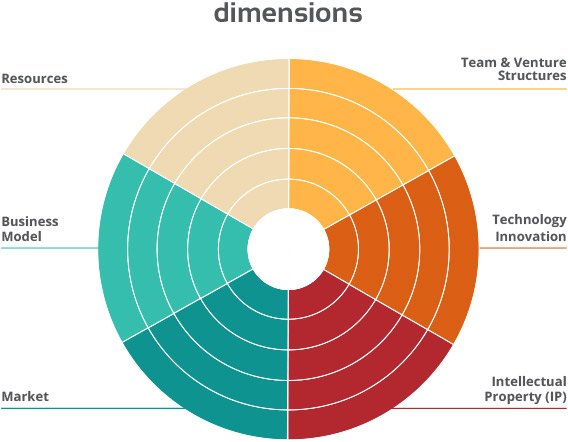
This framework typically focuses on several core dimensions: team quality, technological defensibility, market opportunity, traction, risk, and exit potential.
1. Team Assessment: The Human Core
For most deep-tech investors, the founding team is one of the most critical evaluation factors.
Strong deep-tech teams usually combine deep scientific expertise with operational and commercial execution capability. Investors assess whether founders possess advanced domain knowledge, relevant research experience, technical credibility, and the resilience required to navigate long development cycles.
Indicators such as advanced degrees, research publications, patents, prior industry experience, or work at leading research institutions often strengthen investor confidence.
Equally important is the team’s ability to combine technical and business skill sets effectively.
2. Technology Evaluation: Science Meets Scalability
Technology is often the primary moat in deep-tech investing.
As part of the deep tech VC framework, investors conduct detailed technical due diligence to evaluate whether the underlying innovation is truly differentiated, scalable, and defensible.
This includes assessing intellectual property, patent strength, proprietary research, technical feasibility, and scalability potential. Investors also evaluate whether competitors can easily replicate the technology or whether the company has developed a meaningful long-term advantage.
3. Traction and Milestones: Proof Beyond Promise
Even in highly research-driven sectors, investors look for measurable signs of progress.
Rather than focusing solely on revenue metrics, deep-tech investors often assess milestones such as proof-of-concept validation, pilot programmes, prototype performance, strategic partnerships, research grants, or early enterprise adoption.
Validation from large enterprises, government agencies, or industry partners can significantly reduce perceived investment risk.
4. Risk Profiling: Beyond the Obvious
Risk assessment is a central component of any deep tech VC framework because deep-tech businesses face multiple layers of uncertainty.
Technical risks involve whether the technology can perform reliably at scale. Regulatory risks are particularly important in sectors such as biotechnology, healthcare, aerospace, and defence technology.
Market risks include uncertainty around adoption timelines, while geopolitical risks may impact supply chains, semiconductor access, or manufacturing dependencies.
To evaluate these risks, investors often use structured risk matrices that assess both probability and potential impact, alongside mitigation strategies.
The Deep Tech VC Framework in Practice
Consider a hypothetical fusion-energy start-up.
The founding team may consist of experienced physicists and engineers with strong patent portfolios. The company may already have a validated prototype, early institutional grants, and strategic industry pilots.
At the same time, investors would recognise the significant technical and commercial risks associated with scaling such a business.
Using a structured deep tech VC framework, investors can balance long-term market opportunity against execution risk and determine whether the company justifies patient capital investment.
Ultimately, deep-tech investing requires far more than evaluating financial projections alone. It requires assessing whether breakthrough science can realistically evolve into scalable commercial success.