


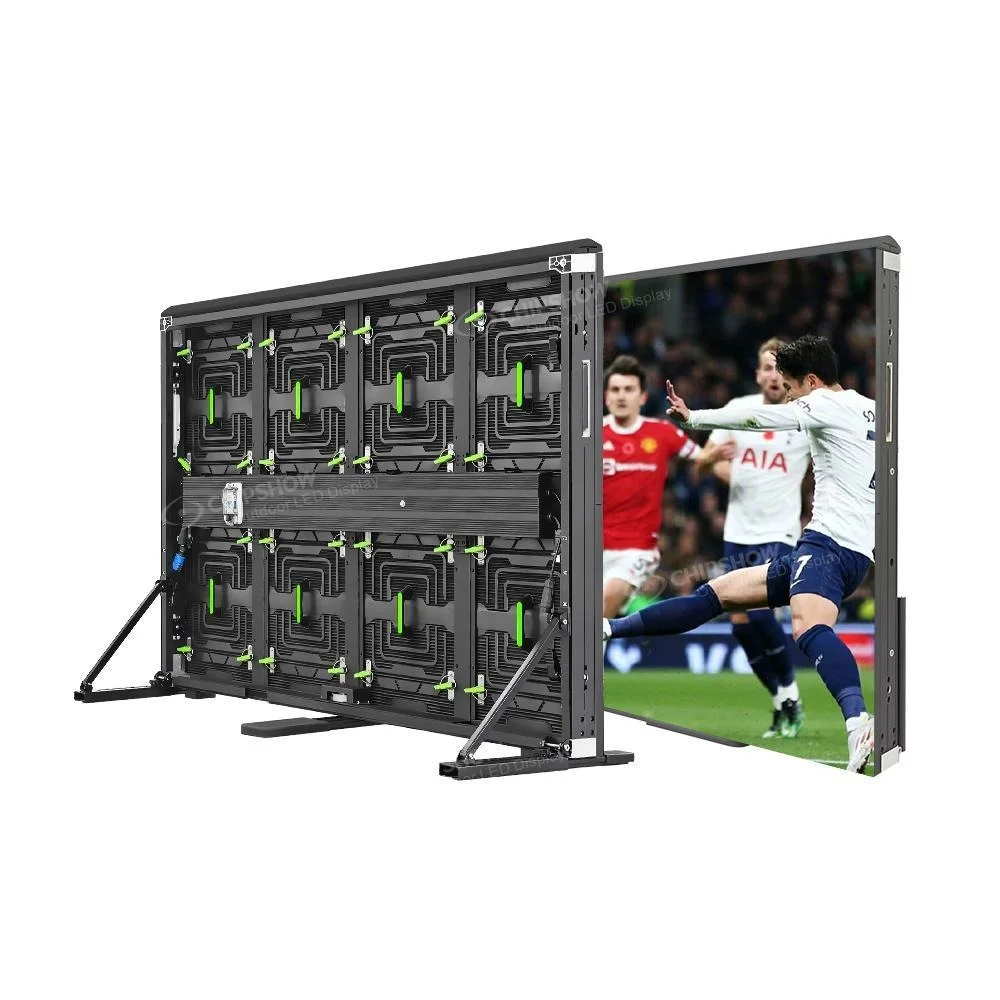
Walk into any modern retail space, and you’ll notice screens everywhere—vibrant displays showcasing promotions, brand stories, and real-time updates that static posters simply cannot match. Digital signage has moved from a luxury to a competitive necessity, with retailers across industries racing to capture attention in increasingly crowded marketplaces. Yet behind every stunning display lies a critical business decision: is the upfront video scoreboard cost justified by the dynamic digital branding impact it delivers? This tension between investment and return keeps many retail decision-makers hesitant, unsure whether the technology will truly elevate their brand or simply drain their budget. This article cuts through the uncertainty by breaking down the real costs involved, examining the measurable benefits of dynamic digital branding, and providing a practical framework for retailers ready to make informed decisions. Whether you’re exploring your first digital display or upgrading an existing setup, understanding this cost-versus-impact equation is essential for enhancing customer engagement and strengthening brand visibility in today’s retail landscape.
Decoding Video Scoreboard Cost: A Detailed Breakdown for Retailers
In retail contexts, a video scoreboard refers to any large-format LED display system used to deliver dynamic visual content—think promotional walls, digital menu boards, or immersive brand storytelling screens. Unlike their sports arena counterparts, retail video scoreboards prioritize brand communication and customer engagement over game statistics, but the underlying technology remains similar. Understanding the cost structure requires examining four primary components: hardware (LED panels, processors, and controllers), software (content management systems for scheduling and updating displays), professional installation, and ongoing maintenance. Display size dramatically influences pricing—a compact point-of-sale screen costs a fraction of a full storefront video wall. Resolution matters equally; finer pixel pitches deliver sharper images at closer viewing distances but increase panel costs substantially. Customization, such as curved configurations or unusual aspect ratios, adds engineering complexity. Compared to traditional static signage, which involves recurring printing and installation fees for every campaign change, video scoreboards carry higher initial costs but eliminate repetitive production expenses over time.
Key Cost Drivers: From Indoor LED Displays to Integration
Indoor LED display specifications are the single largest cost variable retailers encounter. Pixel pitch—the distance between individual LED clusters—directly determines both image clarity and price per square meter. A display with a 1.5mm pixel pitch suitable for close-range viewing in a boutique will cost significantly more than a 4mm pitch display designed for a warehouse-style retailer where customers view from greater distances. Beyond the hardware itself, retailers must budget for professional content creation, which can range from templated designs managed in-house to fully produced video campaigns requiring agency partnerships. Technical support contracts, including remote monitoring, firmware updates, and on-site repair services, represent ongoing operational costs that protect the investment. Integration expenses also deserve attention—connecting displays with existing POS systems, inventory databases, or mobile apps for interactive experiences requires development work that varies based on complexity. Factoring in these secondary costs from the outset prevents budget surprises and ensures the total investment aligns with expected branding outcomes.
Dynamic Digital Branding: Transforming Commercial Branding in Retail
Dynamic digital branding represents a fundamental shift from one-way, static communication to fluid, responsive visual storytelling that adapts to context, audience, and timing. Where traditional branding relied on fixed messages—printed banners, window clings, and cardboard displays that remained unchanged for weeks—dynamic digital branding treats every screen as a living canvas capable of evolving throughout the day. This evolution didn’t happen overnight. Early digital signage simply replicated static content on screens, but advances in content management, data integration, and display technology now enable retailers to deliver personalized messaging based on time of day, weather conditions, inventory levels, or even customer demographics detected through analytics. The advantages over static methods are substantial and measurable. Real-time content updates mean a retailer can promote umbrellas during a sudden rainstorm or shift messaging to highlight clearance items as inventory thresholds trigger automated campaigns. Customer engagement deepens when content feels relevant rather than generic—shoppers pay attention to displays that speak to their immediate context. Personalized messaging, whether through loyalty program integration or location-based triggers, creates a sense of connection between brand and consumer that printed materials simply cannot replicate. For retailers struggling with brand visibility in competitive environments, dynamic digital branding addresses a core challenge: standing out without shouting louder. Instead of competing on size or placement alone, retailers compete on relevance and creativity, transforming in-store experiences from transactional to memorable.
Advantages in Retail Environments: Boosting Engagement and Sales
The measurable benefits of dynamic digital branding in retail settings extend well beyond aesthetics. Retailers implementing video walls and digital displays consistently report increased foot traffic, as motion and vibrant visuals naturally draw eyes from corridors, sidewalks, and competing storefronts. Once customers enter, dwell time increases—shoppers linger near displays showcasing product demonstrations, styling suggestions, or interactive content that invites participation. Brand recall improves dramatically when messaging is delivered through motion and narrative rather than flat imagery; studies consistently show that consumers remember video-based content at significantly higher rates than print equivalents. Consider a fashion retailer that replaced static seasonal posters with dynamic displays showing runway footage interspersed with real-time social media feeds featuring customers wearing the brand. The result was measurably longer time spent in-store and a notable uplift in items tried on per visit. A grocery chain deployed digital end-cap displays that rotated recipe videos featuring products available in the adjacent aisle, linking inspiration directly to purchase opportunity and driving basket size increases. A cosmetics brand used interactive screens allowing customers to virtually test shades, reducing product waste while increasing conversion rates at the point of decision. These examples share a common thread: dynamic content doesn’t just inform—it creates experiences that translate directly into commercial outcomes, making the investment case tangible for retailers evaluating the technology.
Indoor LED Displays: The Engine for Effective Digital Branding
Indoor LED displays serve as the foundational technology powering modern commercial branding strategies in retail environments. Their role extends far beyond simply showing images—they function as communication platforms that bridge the gap between brand intent and customer perception. What makes indoor LED technology particularly suited to retail is a combination of characteristics that no other display medium matches simultaneously. Brightness levels remain consistent regardless of ambient lighting conditions, meaning content looks equally compelling under harsh fluorescent ceiling lights or near sun-drenched storefront windows. Durability ensures continuous operation throughout extended retail hours without image degradation, burn-in, or color shifting that plagues alternative display technologies over time. The modular nature of LED panels provides unmatched flexibility in form factor—retailers can configure displays as narrow ribbon boards guiding customers through departments, towering vertical columns flanking entrances, or seamless video walls spanning entire feature walls behind checkout areas. Manufacturers like Chipshow have expanded the range of available configurations, making it easier for retailers to find modular solutions that match their specific spatial requirements and budget constraints. This adaptability means the display conforms to the retail environment rather than forcing architectural compromises. A luxury watch retailer, for instance, integrated a curved LED display into an existing wooden fixture, creating an immersive brand moment that felt intentional rather than retrofitted. A sporting goods chain deployed pillar-wrap displays throughout their flagship location, transforming structural columns from dead space into dynamic brand touchpoints that showcased athlete endorsements and product launches in rotation. A home improvement retailer used a ceiling-suspended transparent LED screen above their kitchen showroom, projecting lifestyle imagery that helped customers envision finished spaces without obstructing sightlines to physical products. In each case, the indoor LED display didn’t compete with the retail experience—it elevated it, becoming an integral part of how customers perceived and interacted with the brand.
Practical Solutions: Implementing Dynamic Branding to Meet Retailer Needs
Moving from concept to execution requires a structured approach that aligns technology choices with business objectives. Retailers who succeed with dynamic digital branding don’t simply purchase displays and hope for results—they follow a deliberate process that connects their investment to measurable outcomes. The following framework addresses the two most common needs retailers express: understanding how to boost brand visibility in competitive environments and recognizing the specific advantages digital branding delivers in their unique retail context. By working through these steps sequentially, retailers avoid common pitfalls like overspending on unnecessary specifications, underinvesting in content, or deploying displays in locations that fail to maximize audience exposure.
Step 1: Assessing Your Retail Space and Branding Goals
Before evaluating any technology, conduct an honest audit of your current signage ecosystem and its effectiveness. Walk your space as a customer would, noting where eyes naturally land, where traffic bottlenecks create captive audiences, and where existing static materials go unnoticed. Document your customer demographics—age ranges, shopping behaviors, average visit duration—because these factors directly influence content strategy and display placement decisions. Then establish clear objectives that go beyond vague aspirations like “better branding.” Effective goals are specific: increase average transaction value by promoting complementary products at decision points, reduce perceived wait times at checkout through entertaining content, or drive awareness of loyalty programs among first-time visitors. These defined objectives become the criteria against which you’ll evaluate display options and content approaches and ultimately measure success. Without this foundation, retailers risk deploying impressive technology that fails to serve a strategic purpose.
Step 2: Selecting the Right Indoor LED Display Solution
Display selection should flow directly from your space assessment and goals rather than from a product catalog. Start with placement—a display positioned behind a service counter where customers stand two meters away demands a tighter pixel pitch than a wall-mounted screen visible from across a twenty-meter showroom floor. Consider viewing angles relative to customer flow patterns; a display mounted perpendicular to foot traffic needs wider viewing angle specifications than one positioned directly facing an approaching audience. Size should match the architectural context—oversized displays in intimate boutiques feel aggressive, while undersized screens in expansive spaces disappear entirely. Budget allocation matters here: rather than maximizing screen size at the expense of resolution, find the balance point where content appears crisp and professional at the actual viewing distances your customers experience. Factor in future scalability as well, choosing modular systems that allow expansion without complete replacement if your branding strategy evolves.
Step 3: Developing a Dynamic Content Strategy
The display is merely the delivery mechanism—content determines whether your investment generates returns or becomes expensive wallpaper. Begin by establishing brand-consistent visual guidelines specifically adapted for screen delivery: color palettes that remain vibrant on LED, typography sized for legibility at distance, and motion design principles that attract without overwhelming. Build a content calendar that leverages the dynamic advantage by planning time-based rotations—morning messaging differs from evening messaging because your audience composition shifts throughout the day. Integrate real-time data feeds where they add genuine value: inventory-triggered promotions that highlight overstocked items, weather-responsive suggestions that feel helpful rather than gimmicky, or social proof elements displaying recent customer reviews. Interactive elements like QR codes linking to exclusive offers or touchscreen product explorers transform passive viewing into active engagement, creating data collection opportunities that inform future campaigns. Critically, plan for content refresh cycles that keep regular customers seeing something new without requiring constant production investment—mixing evergreen brand storytelling with rotating promotional modules achieves this balance efficiently. Connect your display content strategy to broader marketing campaigns so that in-store messaging reinforces what customers encounter online, in email, and across social channels, creating cohesive brand experiences that compound in effectiveness.
Cost vs. Impact Analysis: Measuring ROI for Retailers
When retailers place video scoreboard costs on one side of the ledger and dynamic digital branding impact on the other, the comparison reveals a compelling long-term value proposition. Initial hardware and installation expenses represent a one-time capital investment, while the benefits compound over months and years through eliminated print production costs, reduced campaign turnaround times, and the ability to test messaging instantly without physical waste. Measuring return requires tracking both quantitative and qualitative metrics. On the tangible side, retailers should monitor sales lift in zones adjacent to displays, conversion rate changes following content updates, and incremental revenue from promoted products compared to pre-display baselines. Customer engagement rates—measured through dwell time analytics, QR code scans, or interaction counts on touchscreen units—provide direct evidence of audience attention. Brand awareness metrics, gathered through post-visit surveys or social media mention tracking, capture the intangible but equally valuable perception shifts that dynamic content creates. The most revealing insight from retailers who have made this transition is that breakeven typically arrives faster than projected, because the flexibility to update messaging without production delays means every campaign launches at peak relevance. Static signage depreciates the moment market conditions shift; dynamic displays appreciate as content strategies mature and audience data accumulates. Retailers who frame the decision as a long-term brand infrastructure investment rather than a one-time equipment purchase consistently report higher satisfaction with their results and stronger competitive positioning within their markets.
Strategic Investment in Digital Branding: Your Path Forward
The equation between video scoreboard cost and dynamic digital branding impact ultimately favors retailers who approach the investment strategically rather than reactively. As this analysis demonstrates, costs become manageable when broken into their component parts—hardware, software, installation, content, and maintenance—and aligned with clearly defined branding objectives. The returns, both measurable and perceptual, consistently outpace the initial outlay when retailers commit to thoughtful display selection, purposeful placement, and content strategies that leverage the dynamic advantage over static alternatives. Indoor LED displays have proven themselves as the most versatile and effective engine for commercial branding in retail environments, offering the brightness, durability, and configurability that modern retail spaces demand. The retailers gaining competitive ground today are those who recognize digital signage not as an expense line but as brand infrastructure—an asset that appreciates as content strategies sharpen and customer data deepens understanding of what resonates. For those still weighing the decision, the market trajectory is clear: customer expectations for engaging, relevant, and visually compelling retail experiences will only intensify. The time to begin your digital transformation is now, starting with a space assessment, progressing through informed technology selection, and building toward a content ecosystem that keeps your brand visible, memorable, and commercially effective.