



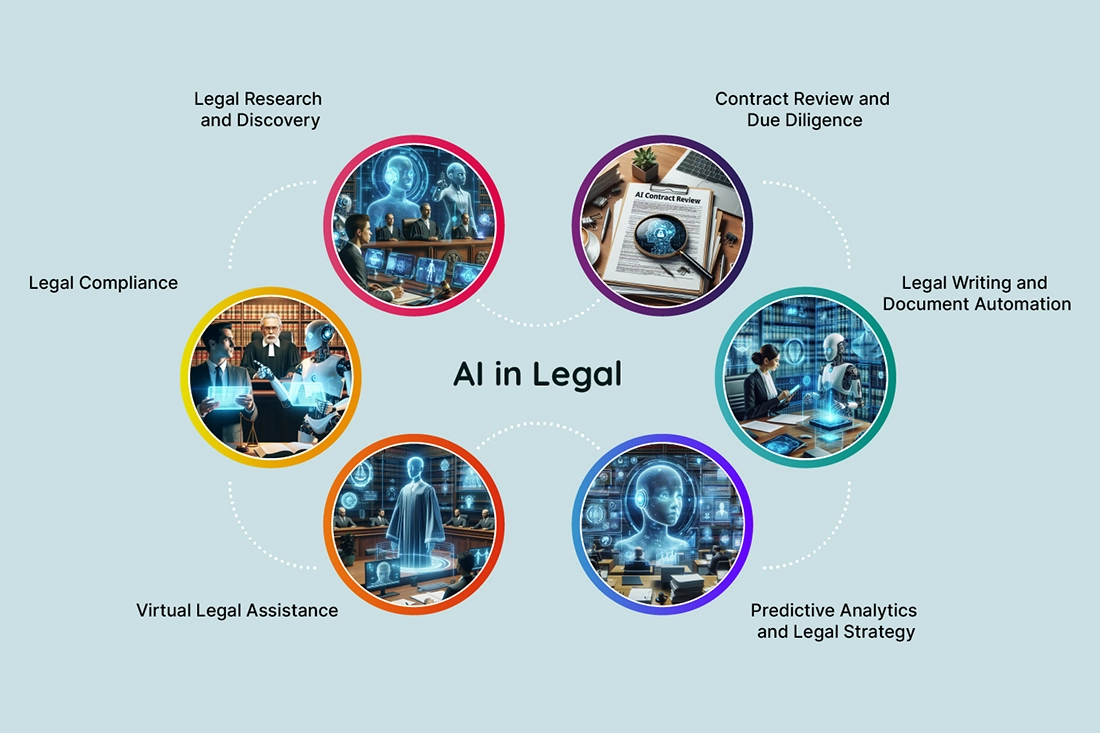

Legal research has always been the cornerstone of effective legal practice. Whether preparing for trial, drafting a motion, or advising a client, lawyers depend on thorough, accurate research to build persuasive arguments and provide sound counsel. Traditionally, this process involved hours spent poring over case reporters, digesting statutes, and navigating complex citation trails. Today, artificial intelligence is revolutionizing this fundamental aspect of legal work, offering benefits that extend far beyond simple time savings. The adoption of AI for legal research is transforming how lawyers work, improving outcomes for clients, and democratizing access to comprehensive legal analysis.
Unprecedented Speed and Efficiency
The most immediate and obvious benefit of using AI for legal research is speed. What once took days or even weeks can now be accomplished in minutes. AI-powered research platforms can scan through millions of cases, statutes, regulations, and legal documents instantaneously, identifying relevant precedents and legal principles with remarkable accuracy.
This speed advantage compounds throughout the research process. When a lawyer can quickly test multiple legal theories or explore various jurisdictional approaches, they can develop more comprehensive strategies. A research task that might have consumed an entire day for a junior associate can now be completed in an hour, freeing that lawyer to focus on analysis, strategy, and client communication.
The efficiency gains translate directly to cost savings for clients. Under traditional billing models, legal research could generate substantial fees, particularly in complex cases requiring extensive precedent review. With AI legal tools handling the initial research-heavy lifting, lawyers can deliver the same or better results at significantly lower cost, making legal services more accessible and affordable.
Enhanced Accuracy and Comprehensiveness
Beyond speed, AI for legal research delivers superior accuracy and comprehensiveness. Human researchers, no matter how skilled, can miss relevant cases, especially when working under time pressure or searching across multiple jurisdictions. AI systems don’t experience fatigue, distraction, or cognitive biases that can cause humans to overlook important precedents.
Modern AI research platforms use natural language processing to understand legal concepts rather than just matching keywords. They can identify relevant cases even when different terminology is used, recognize analogous situations, and understand the nuanced relationships between legal principles. This semantic understanding means more thorough results with fewer false positives or missed authorities.
AI systems can also analyze the treatment history of cases, instantly identifying whether precedents have been overruled, distinguished, or questioned by subsequent decisions. This citation analysis, which traditionally required painstaking Shepardizing or KeyCiting, happens automatically and continuously, reducing the risk of citing bad law, a potentially career-ending mistake for any attorney.
Predictive Insights and Strategic Advantages
Perhaps the most transformative benefit of AI legal research tools is their ability to provide predictive insights. By analyzing thousands or millions of judicial decisions, these systems can identify patterns in how judges rule on particular issues, predict likely outcomes, and suggest which arguments are most likely to succeed in specific circumstances.
This predictive capability allows lawyers to advise clients with unprecedented precision. Instead of offering general assessments based on experience and intuition, attorneys can provide data-driven insights about litigation risks, settlement values, and strategic options. For clients facing important legal decisions, this quantitative dimension adds tremendous value.
AI platforms can analyze judicial behavior patterns, identifying which judges are more receptive to certain types of arguments or evidence. They can reveal trends in how specific legal issues are being decided across different jurisdictions, helping lawyers anticipate emerging shifts in legal interpretation. This intelligence transforms legal research from a backward-looking exercise into a forward-looking strategic tool.
Discovery of Novel Arguments and Connections
One of the most exciting benefits of AI for legal research is its ability to surface novel arguments and unexpected connections. By analyzing vast bodies of case law, AI systems can identify analogies and legal theories that human researchers might never consider. They can find relevant precedents in unexpected practice areas, revealing cross-jurisdictional insights that provide creative solutions to legal problems.
For example, an AI system researching a technology law issue might identify relevant principles from cases involving older technologies, drawing parallels that illuminate how courts might approach new questions. It might be discovered that judges who previously ruled on similar regulatory frameworks took approaches that could inform arguments in an unrelated area of law.
These serendipitous discoveries can be case-winners. In litigation, finding that one unexpected precedent or recognizing a novel legal theory can differentiate a winning brief from a losing one. AI’s ability to make connections across vast datasets gives lawyers a powerful tool for developing creative, persuasive arguments.
Jurisdiction-Specific Intelligence
Legal research often requires understanding how issues are treated across multiple jurisdictions. AI legal research tools excel at comparative analysis, instantly showing how different courts or states approach similar legal questions. This jurisdictional intelligence is invaluable for lawyers handling multi-state litigation, advising clients on business operations across state lines, or researching choice-of-law questions.
AI platforms can reveal jurisdictional splits, identify majority and minority approaches, and track how legal doctrines evolve differently in various courts. They can analyze whether particular jurisdictions are becoming more or less friendly to certain types of claims, helping lawyers advise clients about venue selection or forum shopping opportunities.
For lawyers practicing in specialized areas like intellectual property or securities law, AI tools can track how different federal circuits interpret the same statutes, revealing circuit splits that might warrant Supreme Court review or suggesting strategic advantages to filing in particular venues.
Real-Time Updates and Continuous Monitoring
The law is constantly evolving through new decisions, legislative changes, and regulatory updates. AI-powered research platforms provide real-time alerts when relevant new authorities are published, ensuring lawyers stay current without manually monitoring multiple sources.
This continuous monitoring capability is particularly valuable for lawyers working on extended litigation or long-term client relationships. They can set up alerts for specific legal issues, parties, or judges, receiving notifications when relevant developments occur. This proactive approach prevents the dangerous situation of preparing arguments based on outdated law.
Some AI systems can even monitor pending legislation and proposed regulations, helping lawyers anticipate legal changes that might affect their clients. This forward-looking intelligence enables proactive counseling rather than reactive problem-solving.
Democratization of Legal Expertise
Perhaps the most socially significant benefit of AI for legal research is its democratizing effect. Sophisticated legal research tools that were once available only to large law firms with extensive libraries and research budgets are now accessible to solo practitioners, small firms, and legal aid organizations.
This democratization helps level the playing field in legal representation. Public defenders and legal aid attorneys can now access the same quality of research tools as their well-funded opponents, improving representation for underserved populations. Small firms can compete with larger ones on the strength of their research and arguments rather than the depth of their resources.
For lawyers in rural areas or developing markets, AI research platforms provide access to comprehensive legal databases and analytical tools that would otherwise be unavailable. This geographic democratization expands access to justice by enabling competent representation regardless of location.
Enhanced Collaboration and Knowledge Sharing
AI legal research platforms facilitate collaboration by allowing multiple lawyers to work from the same research foundation, share annotations, and build upon each other’s work. Teams can organize research around specific cases or legal issues, creating institutional knowledge that persists even as individual lawyers come and go.
These platforms often include features for annotating cases, highlighting key passages, and organizing research into folders or projects. This structured approach to research management helps large teams coordinate their efforts and ensures that valuable research insights aren’t lost in individual lawyers’ files.
For law firms, AI research tools can capture and preserve the expertise of senior attorneys, making their research methodologies and insights available to junior lawyers. This knowledge transfer accelerates professional development and maintains quality standards across the organization.
Reduced Research Fatigue and Improved Quality of Life
The psychological and practical benefits of AI-enhanced research shouldn’t be underestimated. Legal research can be tedious and mentally draining, particularly when searching for that elusive case you know exists but can’t quite locate. AI tools reduce this frustration by quickly finding relevant authorities and confirming your legal intuitions.
For young lawyers, the pressure to demonstrate competence through exhaustive research can be overwhelming. AI assistance provides confidence that research is comprehensive and accurate, reducing anxiety and improving work quality. Senior lawyers benefit from AI’s ability to handle routine research tasks, freeing them to focus on the strategic and creative aspects of legal work that drew them to the profession.
The time savings from AI research also contribute to better work-life balance. When research that once required working late into the night can be completed during normal business hours, lawyers can reclaim personal time while still delivering excellent results for clients.
Integration with Other Legal Technologies
Modern AI legal research platforms don’t exist in isolation, they integrate with other legal technologies to create seamless workflows. Research results can flow directly into document assembly systems, practice management software, and litigation support platforms. This integration eliminates redundant work and ensures that research insights inform every aspect of case management.
For example, research findings can automatically populate brief templates, with relevant citations inserted in proper format. Predictive analytics from research platforms can inform case valuation in litigation management systems. Integration with billing software allows firms to track research efficiency and demonstrate value to clients.
Conclusion
The benefits of using AI for legal research extend far beyond faster searches and lower costs. These tools are enhancing accuracy, revealing strategic insights, democratizing access to sophisticated legal analysis, and improving the quality of legal representation across the profession. As AI technology continues to evolve, its impact on legal research will only deepen, offering even more powerful capabilities for lawyers who embrace these tools.
The most successful lawyers in today’s environment are those who view AI legal research platforms not as threats to their expertise but as powerful allies that amplify their capabilities. By handling the mechanical aspects of research, AI frees lawyers to focus on what they do best: exercising judgment, crafting persuasive arguments, and serving clients with wisdom gained from experience. The future of legal research is not artificial intelligence replacing human intelligence, it’s the two working together to achieve results neither could accomplish alone.