



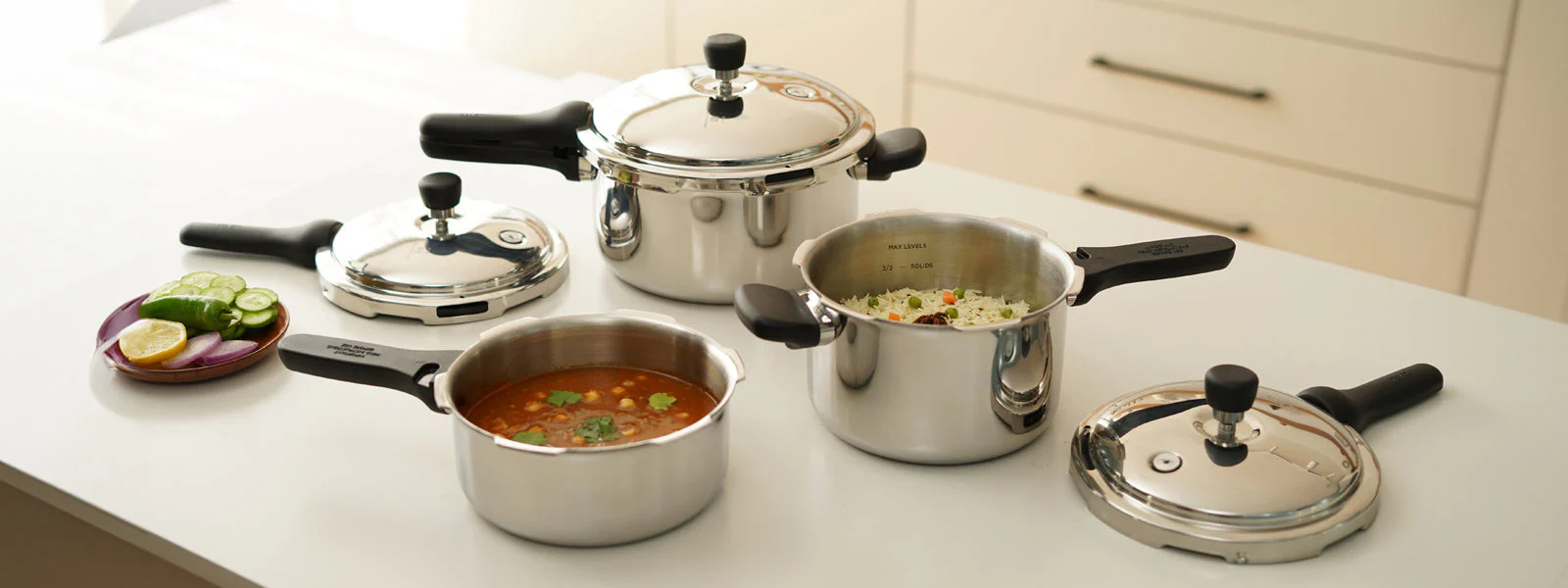
Have you ever looked at your pressure cooker and thought, I only use you for dal and rice, don’t I? Be honest. Most of us do. We buy a good pressure cooker with big plans. Faster meals. Easier cooking. Less stress. Then real life kicks in. We fall into habits. The cooker comes out for the same two or three dishes. Cooking starts to feel repetitive again. Time still feels short. Meals feel rushed. Argh.
But here is the thing. A pressure cooker can do much more than we give it credit for. It not only saves you time when you are running late. Used well, it can change how food tastes, how much effort cooking takes, and how calm you feel in the kitchen. You do not need fancy techniques or chef-level skills. You just need to approach it a little differently. Nothing complicated. Just small, practical shifts that actually work in real homes.
Why The Pressure Cooker Is Trending Again?
The renewed love for the modern pressure cooker did not happen overnight. It came from a very real place. People want cooking to feel manageable again, not like another exhausting task at the end of the day. Indian kitchens understood this decades ago. Now the rest of the world is catching up.
- The world is discovering Indian cooking wisdom
Indian cooking has always focused on balanced, one-pot meals that deliver flavour and nourishment together. A pressure cooker made that possible on busy weekdays. Global kitchens are now adopting the same logic to simplify complex recipes without stripping away comfort or depth.
- International recipes feel easier at home
There are so many dishes we avoid cooking because they sound exhausting. Stews that need hours. Beans that must be watched. Risotto that demands constant attention. A pressure cooker cuts through all that. What felt like an all-day commitment suddenly fits into a regular evening. When the effort drops, curiosity kicks in.
- Time-saving matters more than ever
Long cooking sounds romantic until you are tired, hungry, and low on patience. A pressure cooker cuts cooking time drastically. You spend less time waiting and more time actually eating or resting. That difference adds up over weeks.
- Nutrition retention drives smarter choices
People care more about what stays in their food, not just how fast it cooks. A pressure cooker preserves nutrients by reducing exposure to heat and water. Meals feel lighter, cleaner, and easier to digest.
Innovative Pressure Cooker Hacks To Elevate Your Home Cooking?
This is where your pressure cooker truly earns its place. Most people use it only to cook faster. That helps, yes, but it barely scratches the surface. These hacks focus on real improvements. No tricks. No exaggerated claims. Just habits that make food taste better and cooking feel less draining.
- Build flavour before sealing the pressure cooker
Do not rush to close the lid. Give yourself five extra minutes. Sauté onions, garlic, ginger, or spices directly in the pressure cooker. Let them soften and release aroma. This step creates depth that pressure alone cannot fix later. Once the lid is sealed, flavour is locked in. If the base is weak, the final dish will be too.
- Use pressure to shorten marination time
Forgot to marinate chicken or paneer again? Happens often. Add spices, salt, and oil directly into the pressure cooker and let it rest briefly before cooking. The enclosed environment helps flavours absorb faster. You still get richness without planning hours ahead.
- Cook base gravies in bulk for calmer weekdays
Onion-tomato gravies cook beautifully under pressure. Make a large batch once. Cool it and store portions. On busy days, add vegetables or protein and finish the dish quickly. This reduces daily chopping and mental fatigue. It quietly makes cooking feel less overwhelming.
- Create rich textures without extra fat
Pressure cooking breaks down vegetables and lentils smoothly. Blend cooked ingredients straight from the pressure cooker. Soups and curries turn naturally creamy without cream or butter. Food feels comforting without heaviness.
- Revive leftovers instead of drying them out
Reheating often ruins good food. Add a small splash of water and warm leftovers gently under pressure. A pressure cooker restores moisture evenly. The food tastes fresh again, not overcooked or dry.
- Use staged cooking for better control
Not everything cooks at the same speed. Start with ingredients that need more time, such as lentils or beans. Release pressure, add quick-cooking vegetables or spices, then bring it back to pressure briefly. This prevents mushy textures and keeps flavours intact. It saves food and frustration.
- Let natural pressure release improve texture
Quick releases are convenient, but not always ideal. Allowing pressure to release naturally continues gentle cooking. Lentils soften better, meats relax instead of tightening, and gravies thicken naturally. This step improves texture without adding effort.
- Use the pressure cooker for prep, not just final cooking
Boiling potatoes, cooking grains, soaking beans, or softening chickpeas becomes effortless in a pressure cooker. Store these prepared ingredients and assemble meals faster later. Cooking feels lighter when half the work is already done.
- Use it to reset your cooking rhythm
This may sound subtle, but it matters. When cooking feels predictable, stress drops. A pressure cooker gives you that rhythm. You know roughly how long things take. You stop hovering over the stove. Cooking feels calmer and more controlled.
- Control spice strength without losing balance
Pressure intensifies flavours, including heat. Instead of adding all spices upfront, start mild and adjust at the end. Finish with garam masala, pepper, chilli oil, or fresh herbs after pressure cooking. This keeps flavours layered and prevents dishes from turning overpowering or flat.
Conclusion
A pressure cooker does far more than speed up cooking. It helps you cook smarter, waste less, and enjoy meals again. With the right hacks, you stop treating it like a basic pot. You start using it like a partner in your kitchen. If cooking feels tiring or boring right now, rethink how you use your pressure cooker. Try one small change this week. Sometimes, that is all it takes to make everyday cooking feel good again.