



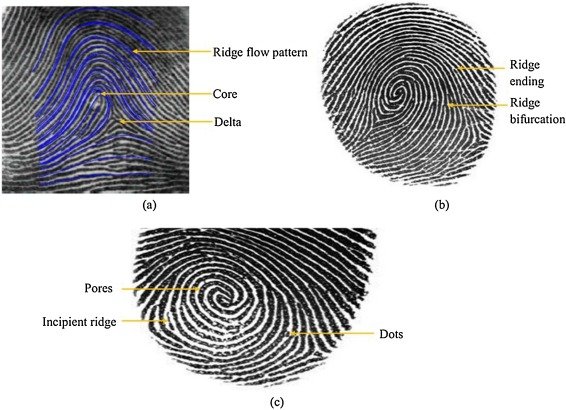
Testing of the Latent Friction Ridge Technology or ELFT is a standardized testing program that determines the capability of the biometric algorithms to process and compare latent prints of the finger. Latent prints are also gathered at the crime scenes and they are usually partial, smudged or distorted. They cannot be taken under controlled conditions and, hence, pose a much greater challenge than typical fingerprint images.
ELFT assists in establishing the accuracy that the software can identify these complex prints and compare them with known databases of fingerprints. The test is concentrated on the real-life forensic cases when the quality of the images is not always the same and the data can be unfinished. This will enable the researchers and practitioners to determine the reliability of a system during its practical use in investigations.
What ELFT Helps Determine
ELFT is primarily used to evaluate the running time of an algorithm with the goal of determining and ranking potential fingerprint matches. It analyses the effectiveness of systems to extract prominent features of ridges and compare them on large scale data.
ELFT assists in the determination of:
Only partial or low quality prints should be matched by accuracy.
False match rates and false non match rates.
Ranking performance in big databases amongst candidates.
Resistance to changes in image condition in algorithms.
These findings offer quantifiable information on the performance of a technology in the field of forensic usage as opposed to when it is used in a controlled laboratory setting.
The relevance of NIST in ELFT
In ELFT, the National Institute of Standards and Technology is at the core of undertaking certain evaluations. NIST is known to set scientific standards and independent testing procedures in the biometric technologies. With its participation all the evaluation process would be neutral, transparent, and consistent criteria.
In forensic biometrics, independent testing must be used. Accuracy and reliability are paramount when the fingerprint comparison systems are employed in criminal investigations. NIST offers a reliable structure which enables the agencies to measure the ability of a system to perform to the expectations based on the operational and legal requirements.
NIST also allows levels of different technologies to be compared equally by standardization of evaluation procedures. This assists the law enforcement agencies, forensic laboratory and government agencies to make sound choices in the use of biometric tools.
The advantages of ELFT to Vendors.
ELFT is a technology used by technology vendors to test and test their fingerprint recognition algorithms. Involvement provides a more comprehensive performance information that may point out the strong and the weak. This information can be used by the developers in order to refine their systems and increase accuracy.
Vendors can also post the results of algorithms testing, which will allow access to performance information to the agencies and decision makers. Public reporting promotes openness and helps in fair comparison of products. Readers who need to read more in-depth summaries and obtainable results can read more here.
It is credible to publish the results of evaluation in the biometric industry. Companies that choose technology have the opportunity to examine the past performance and not just depend on advertising. This will result in more informed purchase decisions and alignment of operational requirements and technical competencies.
Relationship to Extended Biometric Testing
Fingerprint identification is not the only part of identity checking systems in the contemporary world. Several solutions combine various biometric modalities such as face, iris and palm recognition. Assessment in these aspects assists in oiling the cogs so that when combined with systems in a greater identification system, they can perform quite well.
Multi-biometric testing evaluations programs offer more of a viewpoint on the correlation of various recognition technologies. These tests underpin the realization of coherent mechanisms employed in border security, law enforcement and national identity application programs.
Real World Relevance of ELFT
ELFT is based on real-world forensic situations, as opposed to optimum image acquisition scenarios. Latent prints to be tested are of different clarity, completeness and distortion. Algorithms have to work regardless of such conditions and they should still be able to give trusted candidate matches.
ELFT is particularly useful in an operational setting due to this real world approach. By using evidence that comes out of real investigations, the agencies are in a better position to know how to execute the systems. These findings assist in the increased precision of the identification procedure and better investigative results.
ELFT is also used in policy and procurement decision making. Standardization of results enables organizations to benchmark the vendors in terms of comparable performance levels. This minimizes uncertainty and assists in minimizing that the selected technologies satisfy operational needs.
Promoting Innovation and Industrial Development.
Standardized tests lead to a level of innovation in biometric development. With well established performance benchmarks, developers have motivation to optimize the algorithms and compete on objective outcomes. Such a continuous development and improvement results in better recognition and more reliable forensic instruments.
ELFT also helps in collaboration between researchers, forensic specialists and technology providers. The common information and assessment knowledge contribute to the development of the future standards and to the enhancement of the knowledge about latent fingerprint analysis.
Latent Friction Ridge Technology is a part of the contemporary forensic biometrics that must be evaluated. It gauges the ability of algorithms to process difficult latent fingerprints and it presents objective data regarding performance of the system. ELFT enhances credibility, openness and reliability of the fingerprint recognition technologies through independent testing conducted by NIST.
The program promotes the enhancement of technology, sound decision making, and responsible use of the biometric systems in the investigative settings. ELFT remains an important part of the development of forensic identification techniques by providing quantifiable standards and motivating people to report their findings.