


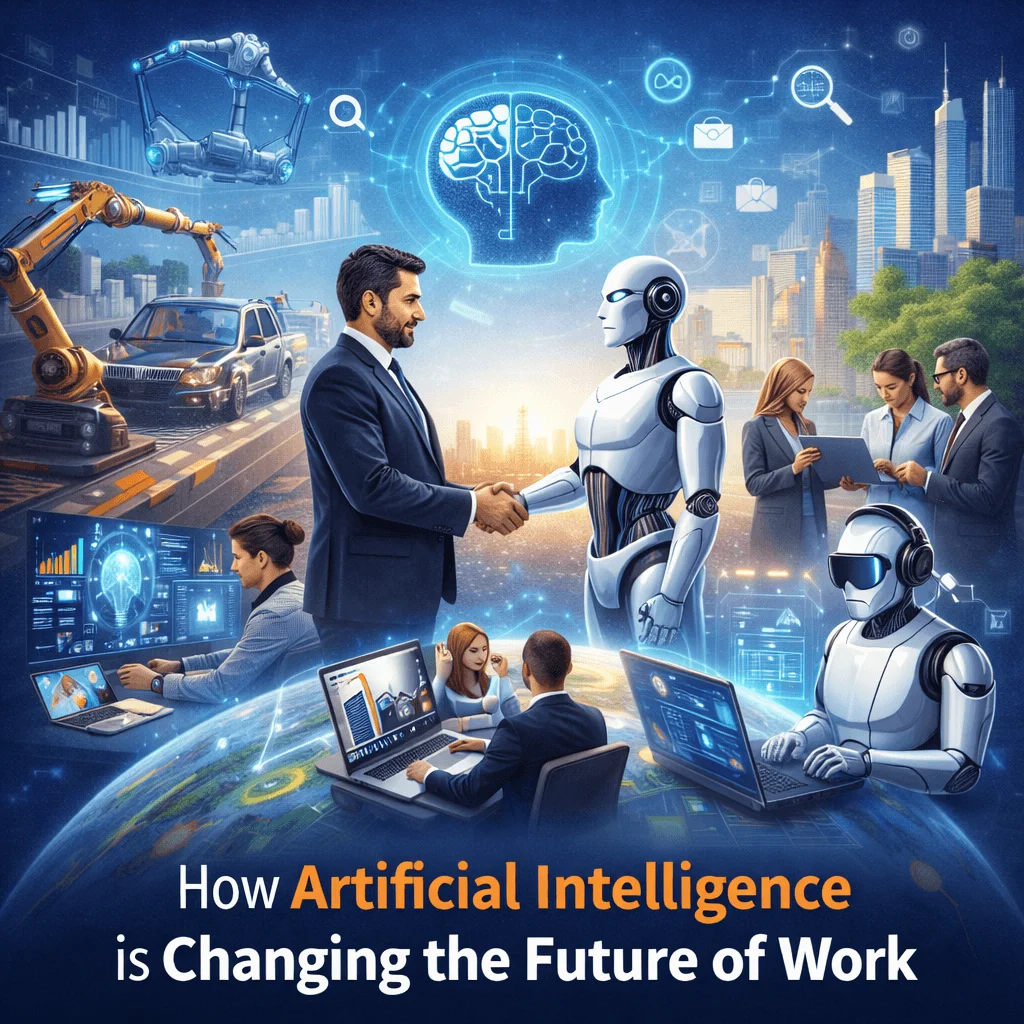
Artificial Intelligence (AI) is transforming the way businesses operate and how professionals perform their daily tasks. From automated customer service systems to advanced data analytics tools, AI is reshaping industries across the world. Companies are increasingly adopting intelligent technologies to improve productivity, reduce operational costs, and make better strategic decisions.
The future of work will not simply be about replacing human workers with machines. Instead, it will involve a strong collaboration between humans and intelligent systems. As AI tools handle repetitive tasks, professionals will focus more on creativity, communication, and strategic thinking.
Understanding how artificial intelligence is changing the workplace is essential for professionals who want to remain competitive in the modern global job market.
Automation of Routine Tasks
One of the most noticeable impacts of artificial intelligence is the automation of routine work. AI-powered systems can analyze large volumes of data, identify patterns, and complete administrative processes much faster than humans.
Industries such as banking, logistics, healthcare, and customer service have already integrated AI tools to automate tasks like:
- Data entry and reporting
- Customer support responses
- Appointment scheduling
- Inventory management
- Financial analysis
This automation allows businesses to reduce costs and improve efficiency. Employees are then able to concentrate on tasks that require human intelligence, such as creative problem solving, innovation, and relationship building.
Although automation may reduce certain repetitive roles, it often leads to the creation of new opportunities that require higher-level skills.
The Rise of New Career Opportunities
Artificial intelligence is creating new career paths that did not exist a decade ago. Organizations adopting advanced technologies require skilled professionals who can design, implement, and maintain AI systems.
Some emerging career roles influenced by AI include:
- Machine learning engineers
- Data scientists
- AI ethics specialists
- Automation consultants
- Digital transformation managers
These careers demonstrate how technological innovation can create new employment opportunities. However, success in these roles requires a combination of technical knowledge and strong soft skills.
Human Skills Are Becoming More Valuable
Interestingly, the growth of artificial intelligence is increasing the importance of human abilities. While machines are excellent at processing information, they cannot replicate emotional intelligence, creativity, or cultural understanding.
As automation takes over routine tasks, employers increasingly value professionals who possess skills such as:
- Critical thinking and problem solving
- Creativity and innovation
- Leadership and teamwork
- Communication and negotiation
- Cultural awareness
Communication skills and language abilities are especially valuable in global workplaces where professionals interact with colleagues and clients from different countries.
Institutions such as the Indian Institute of Foreign Languages offer programs that help professionals develop global communication abilities and language proficiency. Learning international languages through platforms like
can help individuals prepare for careers in multinational companies and international environments.
The Globalization of Work
Artificial intelligence has also accelerated the globalization of work. Digital collaboration tools allow companies to manage teams across multiple countries and time zones.
Remote work has become increasingly common, enabling organizations to hire talent from around the world. A project team may include employees from different continents who collaborate through digital platforms powered by AI.
In such an environment, communication across languages and cultures becomes extremely important. Professionals who learn foreign languages often find it easier to build relationships with international colleagues and clients.
For example, professionals interested in working with Japanese companies or global technology firms can benefit from learning Japanese through programs such as
which help learners develop language skills needed for international careers.
Continuous Learning in the AI Era
Artificial intelligence is also changing how people approach learning and career development. Traditional career paths are evolving quickly as technology advances.
To stay relevant, professionals must adopt a mindset of lifelong learning. Continuous education allows individuals to develop new skills and adapt to technological changes.
AI-powered learning platforms now provide personalized training programs that help learners improve their skills more efficiently. Online courses, virtual classrooms, and digital training tools make it easier for professionals to upgrade their knowledge at any stage of their career.
Continuous learning is becoming one of the most important factors in long-term career success.
Ethical Challenges and Workforce Transition
Despite its many advantages, artificial intelligence also presents several challenges. Automation may lead to job displacement in certain industries where routine work is dominant.
Organizations must therefore invest in reskilling and upskilling initiatives that help workers transition into new roles created by technological innovation.
Another important challenge is the ethical use of artificial intelligence. Issues such as data privacy, algorithm bias, and transparency must be carefully managed as AI systems increasingly influence decision-making processes.
Responsible development and regulation of AI technologies will play a crucial role in ensuring that these systems benefit society.
Preparing for the Future Workforce
The future workplace will involve a close collaboration between humans and intelligent machines. Instead of replacing workers entirely, AI technologies will enhance human capabilities and improve productivity.
Professionals who want to succeed in this evolving environment should focus on developing a balanced set of skills that includes both technological expertise and human-centered abilities.
Some of the most valuable skills for the future workforce include:
- Digital literacy and technological awareness
- Critical thinking and creativity
- Communication and teamwork
- Cultural understanding and language skills
- Adaptability and lifelong learning
By developing these competencies, individuals can position themselves for success in the rapidly changing global economy.
Conclusion
Artificial intelligence is reshaping the future of work in significant ways. Automation is improving efficiency, new career opportunities are emerging, and global collaboration is becoming more common than ever before.
Although technology will continue to transform industries, human abilities such as creativity, communication, and cultural understanding will remain essential. Professionals who combine technological knowledge with strong interpersonal skills will be best prepared for the opportunities and challenges of the AI-driven workplace.