

Getting rid of unwanted things sounds easy until you have to actually move them. Small household items can be donated, sold or thrown away without much trouble. But what happens when the item is large, heavy, broken or difficult to transport?
This is where decluttering can become frustrating. From old furniture to unused vehicles, some things require a little more planning before they can leave your property.
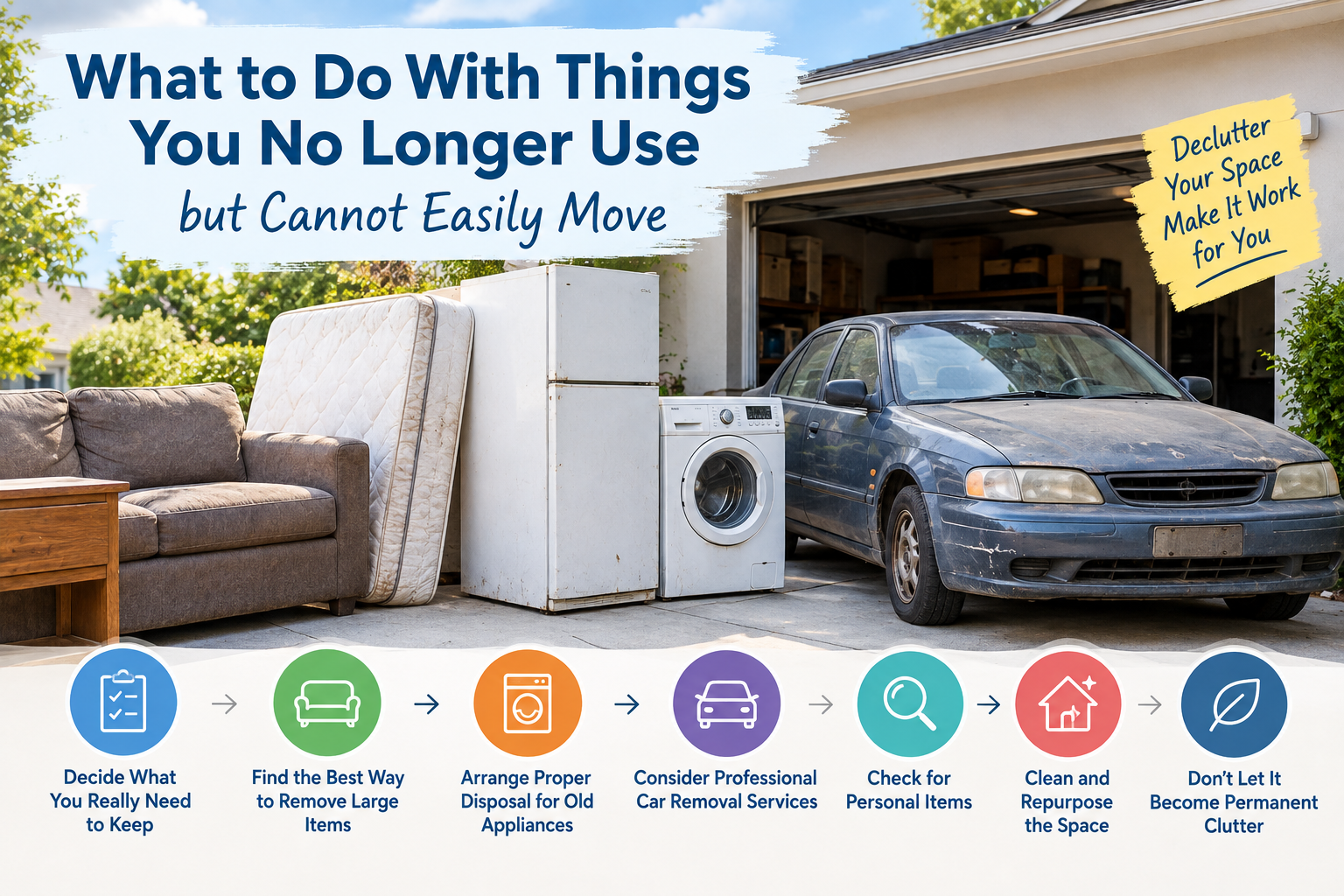
Start by Deciding What Really Needs to Go
Before worrying about how to remove something, decide whether you still need it. Ask yourself when you last used it and whether you are likely to use it again. If something has been sitting untouched for years, keeping it may simply be taking up space. Once you decide that an item needs to go, you can work out the most practical way to remove it.
Large Furniture Can Be Difficult
Old sofas, wardrobes, mattresses and large tables are common examples. They may be too heavy to move alone and may not fit into a standard vehicle. Depending on their condition, you could sell them, donate them or arrange an appropriate collection service. Do not forget to check local disposal requirements before putting large items out for collection.
Old Appliances Can Also Become a Problem
Broken refrigerators, washing machines and other appliances can be difficult to transport. They are heavy, awkward and sometimes require special handling.
Rather than leaving them in the garage indefinitely, check whether the retailer, council or a specialist collection service can help. The sooner you deal with them, the sooner you get your space back.
An Unwanted Car Is a Different Challenge
Vehicles are probably one of the biggest unwanted items a homeowner can have. You cannot simply move an old car to the kerb.
If it is no longer running, damaged or unregistered, moving it can be even more complicated. Trying to arrange a trailer or borrowing a suitable vehicle can take time and may not be practical.
This is one reason people consider cash for cars services when they want to sell an unwanted vehicle.
You May Not Need to Move the Car Yourself
One of the useful things about professional car removal is that the vehicle can often be collected from your location. This can save you from finding a way to transport a vehicle that does not run.
If you live in Sydney and are considering your options, researching car removal services can help you understand how the process works and what may be available for your vehicle.
Check the Condition Before You Decide
Do not assume an old or damaged vehicle has no value. Different vehicles can have value based on their make, model, age, condition and parts.
Even a car that is no longer suitable for everyday driving may still have components that can be reused or recycled. Getting a quote can give you a better idea of what your options are.
Make Sure You Remove Personal Items
Before any large item leaves your property, check it carefully. This is especially important with cars. Look through the glove box, centre console, boot and storage compartments. Remove personal documents, sunglasses, chargers, tools and anything else you may want to keep. It is easy to overlook small items when you are focused on getting rid of the vehicle.
Clear the Space Properly Afterwards
Once the unwanted item has been removed, do not immediately fill the empty space. Take a moment to clean the area and think about how you want to use it.
An empty section of the garage could become a workshop. A cleared driveway could make parking easier. A storage area could become more organised.
The goal of decluttering is not simply to remove things. It is to make your home more practical.
Do Not Let Difficult Items Become Permanent Clutter
Large unwanted items are easy to ignore because they are difficult to deal with. But the longer they stay, the more normal they become. If you have an unwanted vehicle taking up space, looking into cash for cars and professional car removal can give you a practical way to deal with it. Once the difficult item is gone, you may be surprised by how much easier the rest of your decluttering becomes.