


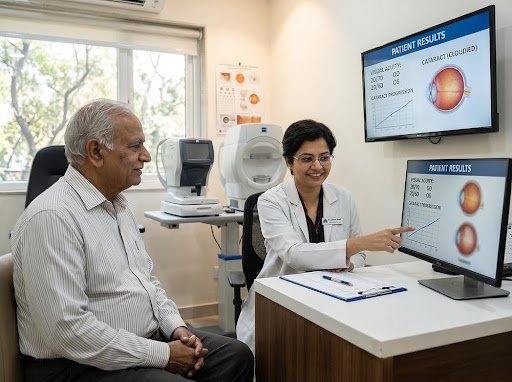
Most of us imagine an eye test as reading letters off a wall, but a first comprehensive check-up goes much further. A visit to an eye hospital can reveal problems you would never spot yourself, from raised eye pressure to early retinal changes that cause no symptoms. If you feel nervous about what to expect, you are not alone. This blog walks you through the appointment step by step, covering the tests, the dilation drops, and what happens afterwards.
Why a Full Check-Up Matters
Many eye conditions develop slowly and painlessly, so clear vision on a chart does not always mean healthy eyes. Glaucoma, for instance, can progress for years unnoticed. A full examination at a trusted eye care hospital gives you a baseline for the future. Doctors at an eye hospital can then spot small changes early, when treatment works best.
Before the Examination Begins
The appointment usually starts with a chat rather than a machine. An optometrist at the eye hospital will ask about your health, family history and daily habits, so it helps to bring along:
- Your current glasses or contact lenses
- A list of your medicines, including eye drops
- Details of conditions such as diabetes
Most people find this stage relaxed, and a friendly eye care hospital team will happily answer questions as you go.
The Tests That Go Beyond the Eye Chart
This is the core of the visit, and each test has a different job. Most take only minutes and none hurt. Here is what a well-equipped eye hospital will usually cover:
- Refraction, which finds your exact glasses prescription
- Tonometry, which measures eye pressure to screen for glaucoma
- Slit-lamp examination, which magnifies the cornea, iris and lens
- Visual field testing, which maps your side vision
Together, these results give the doctor a full view of your eye health, so every step at the eye hospital matters.
Dilation and the Retina Check
Next, you may be given drops that widen your pupils. They take around 20 to 30 minutes to work and let the doctor see the retina and optic nerve clearly. Your vision stays blurry and light-sensitive for a few hours, so bring sunglasses and arrange for someone to take you home, as the eye hospital staff will advise. Imaging such as OCT, offered at a leading eye care hospital, adds even finer retinal detail.
What Happens After the Tests
Once the tests finish, the doctor explains what they found. You may leave with a new prescription, eye drop advice or a follow-up date. Most adults without symptoms need a full exam every one to two years, though risk factors may mean sooner. Keeping your reports from the eye hospital helps with future comparisons.
Conclusion
A first comprehensive eye check-up is far more than reading letters from a chart. It blends conversation, careful testing and a close look at the back of your eye, all aimed at catching problems early. A welcoming eye hospital team can turn nerves into confidence. So bring your questions, book your visit and take that first step towards healthier eyes. Your future self will thank you for it.