


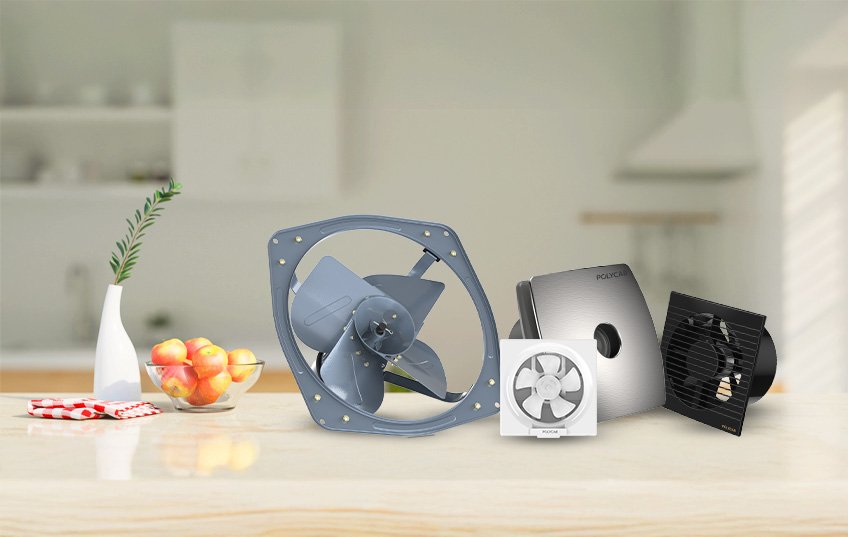
A bathroom vent is considered an add-on most of the time by many people. This is a big error because having the wrong bathroom fan can lead to issues such as dampness, peeling paint, growth of mold around the grout, and an unclean bathroom odor despite cleanliness practices.
Buying the right bathroom exhaust fan upfront costs the same effort as buying the wrong one. The difference is knowing what to evaluate before you spend the money.
1. Airflow Capacity Matched to Your Room Size
Everything starts here. A bathroom exhaust fan core job is moving a specific volume of air out of the room within a set time measured in cubic feet per minute (CFM) in most Indian product listings.
The standard rule is 1 CFM per square foot of bathroom area. Enclosed showers and bathtubs add significant moisture load, so factor in a 15 to 20 percent buffer if your bathroom has either.
| Bathroom Size (sq ft) | Minimum CFM | Recommended CFM With Shower |
| Up to 50 sq ft | 50 CFM | 60 – 65 CFM |
| 50 – 100 sq ft | 80 CFM | 95 – 100 CFM |
| 100 – 150 sq ft | 110 CFM | 125 – 135 CFM |
| Above 150 sq ft | 150+ CFM | Two fans advised |
Fans are often rated at zero static pressure under lab conditions. Real-world performance through actual ductwork drops noticeably; a fan rated 90 CFM on the box may deliver closer to 70 CFM once installed.
2. Noise Rating Below 1.5 Sones
You’ll notice this the first morning someone tries to shower quietly while the rest of the household sleeps. Exhaust fan noise is measured in sones a unit most buyers ignore until they’re living with a fan that sounds like a small aircraft.
One sone is roughly equivalent to a quiet refrigerator hum. Standard budget fans sit between 3.0 and 4.0 sones consistently audible where bathrooms share walls with bedrooms. Look specifically for fans rated 1.5 sones or below. The price difference at identical CFM is rarely significant enough to justify the compromise.
3. Motor Quality That Justifies the Purchase
Ball-bearing motors last approximately 50,000 hours. Sleeve-bearing motors average around 30,000 hours. In a bathroom fan running daily across a ten-year ownership period, that gap translates directly into whether you’re replacing the unit once or twice. Check the spec sheet most product pages don’t lead with this but the information is usually there.
4. Energy Efficiency That Keeps Running Costs Honest
A bathroom exhaust fan in the 80 to 100 CFM range should draw no more than 15 to 20 watts during operation. Anything above 25 watts at that airflow level suggests an outdated motor design. Over a decade of daily use, the difference between a 15-watt fan and a 30-watt fan adds up meaningfully particularly in Indian households where bathroom fans often run across multiple rooms simultaneously.
5. Moisture and IP Protection Rating
This gets overlooked almost universally. An IP44 rating or higher confirms the motor and housing are protected against moisture ingress which matters in a space defined by steam, condensation, and daily splashing. Thermal cut-off protection is another quiet indicator of build quality that most buyers never think to ask about until a motor burns out mid-summer. Check the spec sheet for both before purchasing.
6. Smart Controls That Remove Human Error
A bathroom exhaust fan that only runs when someone remembers to switch it on spends too much time off. Three control types genuinely solve this:
● Humidity sensor: Activates automatically when moisture crosses a set threshold; switches off once levels normalise no manual input needed
● Timer function: Runs for a set duration after the light goes off, ensuring post-shower ventilation without anyone thinking about it
● Variable speed control: Quieter during light use, stronger airflow after a long shower
Humidity-sensing models are particularly practical in households with children or elderly family members where switching habits are inconsistent.
7. Installation Compatibility With Your Bathroom Layout
The most capable fan available is useless if it cannot be installed in your specific configuration. Ceiling-mounted fans need overhead duct access. Wall-mounted models require an exterior-facing wall. Many urban apartment layouts across Indian cities offer neither option cleanly. Check whether the fan requires a 100mm or 150mm duct and confirm your wall or ceiling cavity can physically accommodate it before purchase. Do the site check first. Everything else follows.
Your decision to choose a bathroom exhaust fan is one that will never come up in discussion, and no one will ever even notice the decision that you made.But if you get it right, then your bathroom is going to be completely dry and odorless for the next decade without developing any kind of structure damage.
Seven characteristics include airflow, sound level, motor, efficiency, moisture resistance, smart control, and installation flexibility. Each one specific, each one checkable before you walk into a store or open a product page. The Indian market has solid options across every price point. Knowing what to look for is the only thing that separates a purchase you forget about from one you regret.