


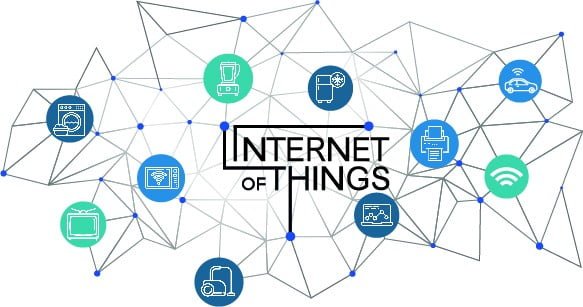
Today, the term the “Industrial Internet of Things” has become prevalent as more businesses in the industrial sector embrace digitization. But what exactly is the Industrial Internet of Things?
Simply put, the Industrial Internet of Things (IIOT), also called the Industrial Internet or Industry 4.0, utilizes the advanced capabilities of smart machines and advanced analytics to monitor, gather, transfer, interpret, and convey information like never before. As a result, industrial IoT facilitates faster and more intelligent business decisions for industries.
IIOT and IOT: What’s the Difference?
Some people use the terms IIOT and the Internet of Things (IoT) interchangeably. Although they have various similarities, they are different from each other.
The Internet of Things is mostly applicable to the consumer segment of the market and includes devices such as smart appliances and activity trackers. Typically, the consequences aren’t catastrophic if something goes wrong with these devices.
Conversely, industrial IoT is a convergence of information technology (IT) and operational technology (OT). IIOT is generally used for industrial purposes.
Sydney IT F1 Solutions states that it connects machines and devices in industries such as manufacturing, healthcare, utilities, and energy.
In these sectors, system failures and unforeseen situations can be catastrophic.
Where is IIOT applicable?
Beyond manufacturing, healthcare, utilities, energy, and oil and gas, IIOT can be applied in many other areas such as:
- Warehousing
- Logistics
- Smart farming
- Smart cities
- Worker safety
- Smart grids
- Equipment monitoring
- Freight tracking
IIOT projects can be split into two categories: connected factories and connected machines.
Connected Factories
Connected factories, also known as smart factories, are digitized facilities that allow the smooth transition of information between machines, people, and sensors. And thanks to improved information flow, connected factories can adapt to the ever-changing needs of an organization. Some of the benefits of these factories include:
- Boosted productivity since they can run 24/7
- Reduced expenditure since they incur lower labor costs
- Improved safety because they can identify problems and rectify them immediately
- Increased efficiency because productivity can be shifted among machines. Plus, valuable insights can be drawn from the production process
Connected Machines
This type of IIOT project is mainly concerned with machine functionality. Connected machines are commonly used for monitoring and analysis of real-time data. They are typically used for product flow monitoring and logistic and inventory management.
As a value addition, machine suppliers often incorporate IoT features into their equipment as part of the service. In a quid-pro-quo arrangement, the suppliers benefit by gaining insights into their machines. Consequently, from these insights, they can improve their machines. On the other hand, as a customer, you can also benefit by using the machine’s remote data gathering capabilities and save on time and transportation costs.
Bottom-Line
Benjamin Franklin once said that two things are inevitable: death and taxes. Another inevitable thing is change. The Industrial Internet of Things has greatly disrupted manufacturing and many other industries.
If you’re in the manufacturing industry or a sector that could significantly benefit from IIOT, you can’t afford to ignore it. IIOT is the future. And often, businesses that don’t embrace the future stay left in the past and struggle to catch up with their more tech-savvy competitors. Therefore, you need an IIOT strategy. But before you adopt IIOT for your business, you need to keenly think about how it will benefit your business against the potential costs.