


Key Takeaways
- Begin with the problems in the current bathroom, not the finish samples.
- Prioritize clear walking paths, practical shower access, safe flooring, and dependable lighting.
- Select materials based on moisture resistance, cleaning needs, and repairability.
- Treat ventilation and waterproofing as core parts of the project scope.
- Build flexibility into the room for changing household needs.
- Review estimates by category so that important work is not overlooked.
Table of Contents
- Why Bathroom Planning Matters
- Start With a Room and Routine Audit
- Choose a More Functional Layout
- Plan Safer Shower Access
- Choose Lower-Maintenance Materials
- Control Moisture and Ventilation
- Improve Lighting and Storage
- Prepare for Future Household Needs
- Build a Practical Remodeling Budget
- Questions To Ask Before Hiring a Remodeler
- Common Bathroom Remodeling Questions
- Conclusion
A successful bathroom remodel solves the frustrations that make daily routines harder, including poor lighting, crowded storage, slippery floors, stubborn grout, and difficult tub access. In Walnut Creek, where many homes have established layouts and homeowners often want to update a bath without wasting usable space, thoughtful planning matters more than chasing a short-lived look.
For homeowners considering a focused wet-area update, bathroom remodel walnut creek services from Rose Remodeling cover shower replacements, bathtub replacements, tub-to-shower conversions, walk-in tubs, and related wet-space improvements. Rose Remodeling is a family-owned Northern California remodeling company with more than 25 years of industry experience, serving Walnut Creek and surrounding East Bay communities with solutions designed around shower and bathing areas.
Why Bathroom Planning Matters
A bathroom can look newly finished while still being inconvenient to use. A vanity may block a door, a beautiful floor may be too slick when wet, or a new surround may conceal an unresolved leak. Start by identifying what needs to work better: bathing, getting ready, cleaning, storing essentials, or moving through the room. This approach helps separate necessary repairs from purely decorative upgrades and can reduce costly decisions after construction begins.
Start With a Room and Routine Audit
Use the bathroom normally for several days and take notes during morning, evening, and cleaning routines. Measure the room, fixture locations, door swing, and open floor space. Notice where water lingers, where the room stays humid, and which cabinets or controls are awkward to reach.
Quick Room Audit Checklist
- Write down three daily frustrations.
- Photograph plumbing, electrical, and ventilation locations before demolition.
- Check for peeling paint, loose caulk, soft flooring, stains, or signs of leaks.
- Label each desired upgrade as essential, useful, or decorative.
- Decide which items must stay within easy reach.
Choose a More Functional Layout
Keep a clear route from the entrance to the vanity, toilet, and bathing area. Door swings should not trap a person in a tight entry or interfere with drawers and towel storage. Retaining the existing plumbing locations can simplify a project, but moving a fixture may be worthwhile when the current arrangement creates a persistent access or cleaning problem. The best layout is the one that fits the household’s real routine and leaves enough usable floor space.
Plan Safer Shower Access
A walk-in shower, standard tub, low-threshold shower, or tub-to-shower conversion can each be appropriate depending on the household. Compare entry height, drainage, floor traction, shower controls, storage, and whether children, guests, or someone recovering from an injury will use the room. A bench, a handheld showerhead, and securely installed support bars can add convenience without making the space feel institutional.
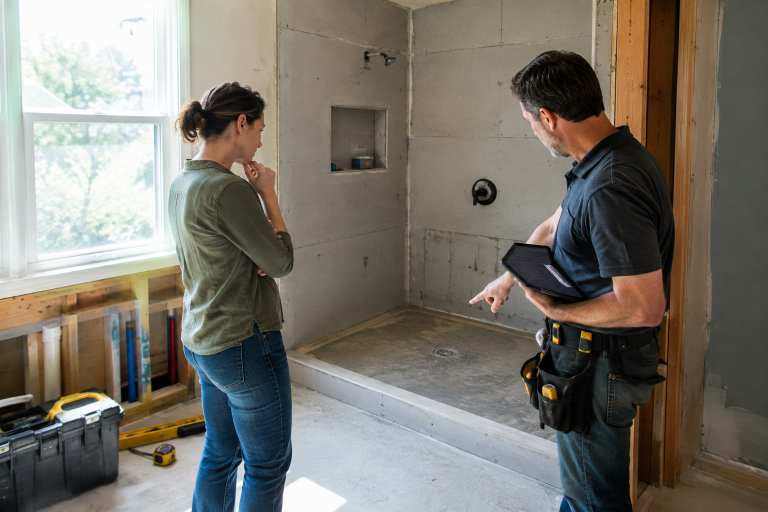
Questions to Ask About a New Shower
- How high is the entry point?
- Will the wet floor provide sufficient traction?
- Where will water drain, and how will splashing be contained?
- Is there room for a seat, niche, or shelf?
- Can wall reinforcement be added for future support bars?
Choose Lower-Maintenance Materials
Material choices affect both cleaning time and long-term upkeep. Large-format tile can reduce the number of grout joints compared with smaller tile, while solid-surface panels and acrylic surrounds can offer fewer seams in a shower enclosure. Porcelain and ceramic tile remain common options, but grout needs regular attention. Ask for written cleaning and sealing instructions before ordering, and choose textures that balance the appearance you want with practical footing when wet.
Control Moisture and Ventilation
The work behind finished walls is often more important than the visible finish. Address leaks, condensation, damaged subfloors, and wet wall areas before installing new materials. The EPA notes that a bathroom exhaust fan should move moist air directly outdoors, while wet walls and flooring need protection that limits water entry into surrounding cavities. Include an operating bathroom exhaust fan that vents outdoors, waterproofing details, drainage, and plumbing inspection in the written scope.
Improve Lighting and Storage
Layered lighting supports safer, more comfortable daily use. Combine general room lighting with even vanity lighting and appropriately rated shower lighting where needed. Reduce glare around mirrors, and avoid relying on one ceiling fixture for every task. Drawers, recessed niches, wall-mounted cabinets, hooks, and towel bars can keep countertops clearer. Store medications and cleaning products where children and pets cannot easily access them.
Prepare for Future Household Needs
Planning for flexibility does not require a clinical-looking bathroom. Lever handles, handheld showerheads, reachable controls, wider clearances, and slip-resistant surfaces can benefit people of different ages and abilities. Adding blocking behind walls during remodeling makes it easier to install support bars later. Steps such as installing grab bars near tubs and showers and using nonslip surfaces help reduce bathroom hazards for older adults.
Build a Practical Remodeling Budget
Compare estimates by what they include, not just the final price. A complete budget may account for demolition, disposal, plumbing, electrical work, ventilation, waterproofing, flooring, fixtures, permits, labor, and cleanup. Keep a contingency for concealed damage, old plumbing, or subfloor repairs discovered after demolition. Before signing, confirm allowances, payment stages, expected project length, warranty terms, and the process for approving change orders.
Questions to Ask Before Hiring a Remodeler
- Who will handle permits and inspections if they are required?
- Who completes demolition, plumbing, electrical work, and installation?
- How will nearby rooms, flooring, and furnishings be protected?
- What happens if hidden damage is found after demolition?
- Which materials, fixtures, cleanup steps, and disposal services are included?
- What labor and material warranties apply?
Common Bathroom Remodeling Questions
Is a walk-in shower always better than a bathtub?
No. The right choice depends on available space, bathing habits, household members, access needs, and future plans. A tub may remain important for some families, while a low-threshold shower may better serve others.
Do low-maintenance materials eliminate cleaning?
No. They may reduce difficult seams or limit staining, but every bathroom still needs regular cleaning, reliable ventilation, and prompt attention to leaks or damaged caulk.
What should be prioritized on a limited budget?
Fund moisture control, waterproofing, ventilation, safe flooring, functional access, and necessary plumbing work before purely decorative upgrades.
Conclusion
The strongest Walnut Creek bathroom remodels balance appearance with comfort, safety, moisture control, and daily practicality. Start with a careful room audit, create a detailed scope, and select products and layout changes that solve genuine problems. That preparation can produce a bathroom that is easier to use, easier to maintain, and better suited to the household for years to come.