


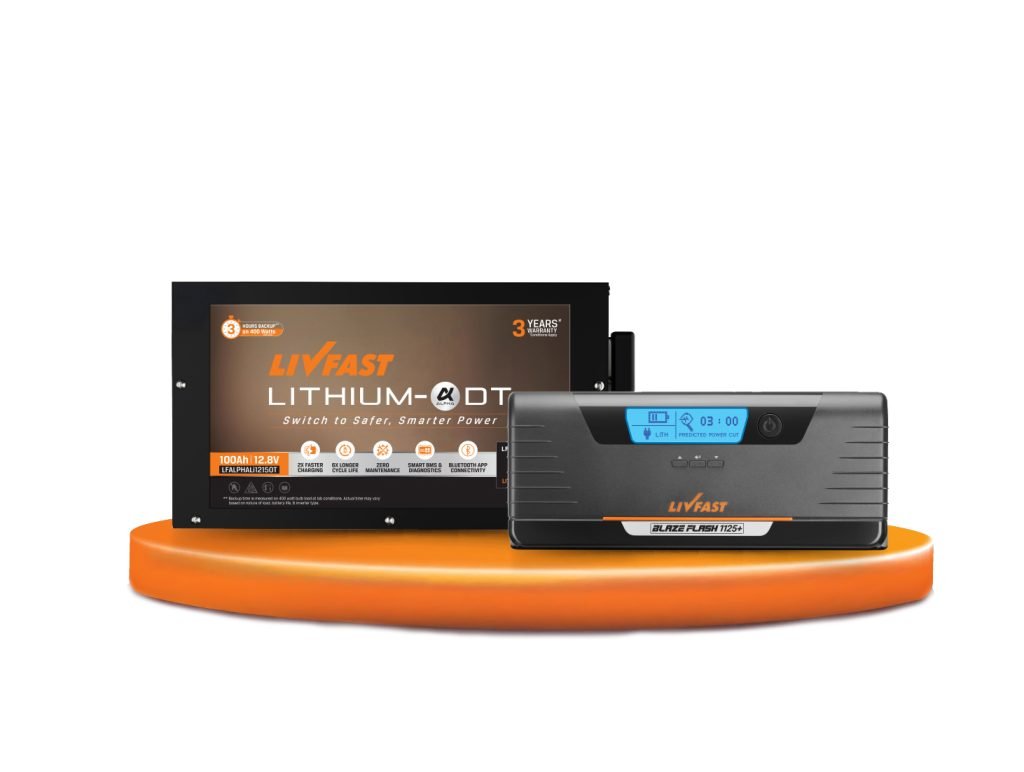
With a good number of Indian homes experiencing power cuts, it has become quite important that you have backup power solutions, and it has become a common reality in many urban and semi-urban households. Not just that, home infrastructure has changed. Earlier, people used to live in single-family homes, and most people in these areas have moved to flats and apartments. Traditional inverter systems just aren’t viable enough in these situations, and as a result, it is extremely important that we use a lithium-ion inverter, but what benefit does it offer?
Understanding Inverter–Battery Systems
Let us understand in detail what inverter battery systems are, or more simply, how an inverter and a battery work together.
First, the battery charges itself and stores energy in DC form, and the inverter converts that energy into AC and powers your appliance when the power runs out. Commonly, there are two types of batteries used in these systems, lead-acid and lithium-ion, with lead-acid being more common as it’s affordable and much more well-known, but it has maintenance issues that make an inverter with lithium ion battery a more viable choice.
Longer Lifespan and Higher Cycle Life
The main problem with lead-acid batteries is that they have a limited lifespan and charge-discharge cycles, which means they last comparatively less, leading to higher replacement costs in the long run. This is why many users are now switching to an inverter with lithium ion battery, as it offers a longer lifespan, more charge cycles, and better overall value over time.
Lithium-ion batteries eliminated this issue as they have a longer cycle life and lifespan altogether, which means fewer replacements and also reduced performance degradation over the years of use, as modern households are in desperate need of affordable solutions.
Faster Charging and Better Energy Efficiency
Fast charging is something a lot of people rely on, as power cuts can be unpredictable. Even the most power-secure areas can shut down at any time due to government work, leaving you in a situation where your inverter battery didn’t even get enough time to charge. This was a rampant problem with lead-acid batteries, which often provided barely 2 hours of backup after promising 4 hours simply because the battery didn’t get adequate charging time. An inverter with lithium ion battery completely changes this experience. Lithium-ion batteries charge significantly faster than conventional alternatives, ensuring better backup readiness. With an inverter with lithium ion battery, you also benefit from smarter energy use, improved charge acceptance during limited electricity availability, and a potential reduction in overall electricity consumption.
Compact Design and Space Optimisation
As we mentioned earlier, Indian living arrangements have changed, and we now cannot have as many space-consuming batteries as we used to until some time ago. This is because we have shifted to more compact flats and apartments, and bulky lead-acid batteries don’t suit the narrative here anymore, which is why lithium-ion batteries are so popular. This is because they allow you to have all the benefits, while simultaneously consuming way less space. They come with Wall-mountable or space-saving designs, reducing floor clutter and are comparatively easy to install than lead acid battery inverters.
Stable Power Output for Sensitive Appliances
The power output needs stability, because there is a growing usage of sensitive appliances like smart TVs, Wi-Fi routers, laptops, and fans. This makes a clean and stable power supply quite important, and as a result, Using An Inverter With a Lithium-Ion Battery takes the cake.
They’re compatible with pure sine wave systems, which are known for protecting appliances during voltage fluctuations, while also providing Reduced noise and vibration during operation, giving you a comfortable and uninterrupted daily routine during outages.
Smart Monitoring and Intelligent Battery Management
What if you could monitor how much power you used, and how much you’re left with? Well, you can with an Inverter with a lithium-ion battery.
| Feature Area | What It Does | Practical Benefit for Homeowners |
| Smart Monitoring Systems | Uses built-in sensors and digital interfaces to track inverter and battery performance | Gives users clear visibility into how their backup system is functioning |
| App-Based Monitoring | Allows users to check battery charge level, power usage, and operating status through a mobile app | Enables real-time monitoring without needing to physically check the inverter |
| Intelligent Battery Management System (BMS) | Automatically manages charging, discharging, and internal battery balance | Helps extend battery life by preventing stress and inefficient usage |
| Overcharge Protection | Stops charging once the battery reaches safe capacity | Reduces battery wear and prevents potential safety issues |
| Thermal Management | Monitors temperature and controls heat buildup | Prevents overheating, ensuring safe and stable operation |
| Short-Circuit and Overload Protection | Instantly cuts off power during faults or excessive load | Protects both the inverter system and connected home appliances |
| Predictive Usage Insights | Analyses past usage patterns and battery health trends | Helps users plan power consumption and optimise backup duration |
Low Maintenance and Improved Safety
Lead-acid batteries had a lot of maintenance that came with it, something which is eliminated with the inverter with a lithium-ion battery.
| Aspect | Why It Matters for Homes |
| Zero Maintenance | No water refilling or routine battery checks required |
| Sealed Battery Design | Prevents acid leakage, corrosion, and harmful fumes |
| Built-in Safety Protections | Guards against overheating, overcharging, short circuits, and overloads |
| Child & Elderly Safety | Safer indoor use with reduced exposure and fault risks |
| Hassle-Free Ownership | Lower upkeep and fewer failures compared to traditional systems |
Long-Term Value for Modern Homeowners
India is a really price-sensitive market, which is why lead-acid batteries were so widely used. But did you know lead-acid batteries are technically more expensive? This is because while you spend more on an inverter with a lithium-ion battery upfront, you save a lot of money and time in the long run with the increased lifespan and low maintenance.
Conclusion
Lithium-ion batteries have a lot of advantages over traditional lead-acid batteries, like:
- Longevity
- Efficiency
- compact design
- smart features
- safety
With household needs changing and evolving, it is extremely important for you to have power backup solutions evolve as well. With the challenges people face with these modern living solutions, inverters with lithium-ion batteries take the win.