

Table of Contents
- What to Do in the First Few Minutes
- How to Shut Off the Water Safely
- Why Electrical Safety Comes First
- How to Limit Water Damage
- When to Call a Plumbing Professional
- Why Pipes Burst in San Antonio
- What to Document for Insurance
- How to Reduce Mold Risk
- How to Prepare Before an Emergency
- Common Questions About Burst Pipes
- Conclusion
A burst pipe can turn a quiet day in a San Antonio home into a fast-moving water emergency. Whether the problem follows a hard freeze, occurs under a sink, or starts behind a wall, the first priorities are protecting people, stopping the water, and avoiding electrical danger. If the leak cannot be safely controlled, contacting an emergency plumber San Antonio homeowners can reach may be the appropriate next step.
Water can move quickly through flooring, cabinets, drywall, and ceilings, so a calm response matters. Do not rush into standing water, attempt risky repairs, or focus on belongings before the area is safe. Use this checklist to make practical decisions during a plumbing emergency in San Antonio, Texas.
What to Do in the First Few Minutes
Start by getting children, pets, and guests away from the affected area. If water is spraying from a visible pipe and you can reach the shutoff valve without crossing standing water or touching electrical equipment, turn off the water. If the leak is hidden, widespread, or unsafe to approach, move away from the area and shut off the main water supply if it is accessible.
- Keep people away from wet floors, ceilings, outlets, and appliances.
- Identify the source only if it is safe to do so.
- Shut off the closest fixture valve or the home’s main water valve.
- Place a bucket under a small, contained drip if doing so is safe.
- Take photographs after the immediate safety risks are controlled.
How to Shut Off the Water Safely
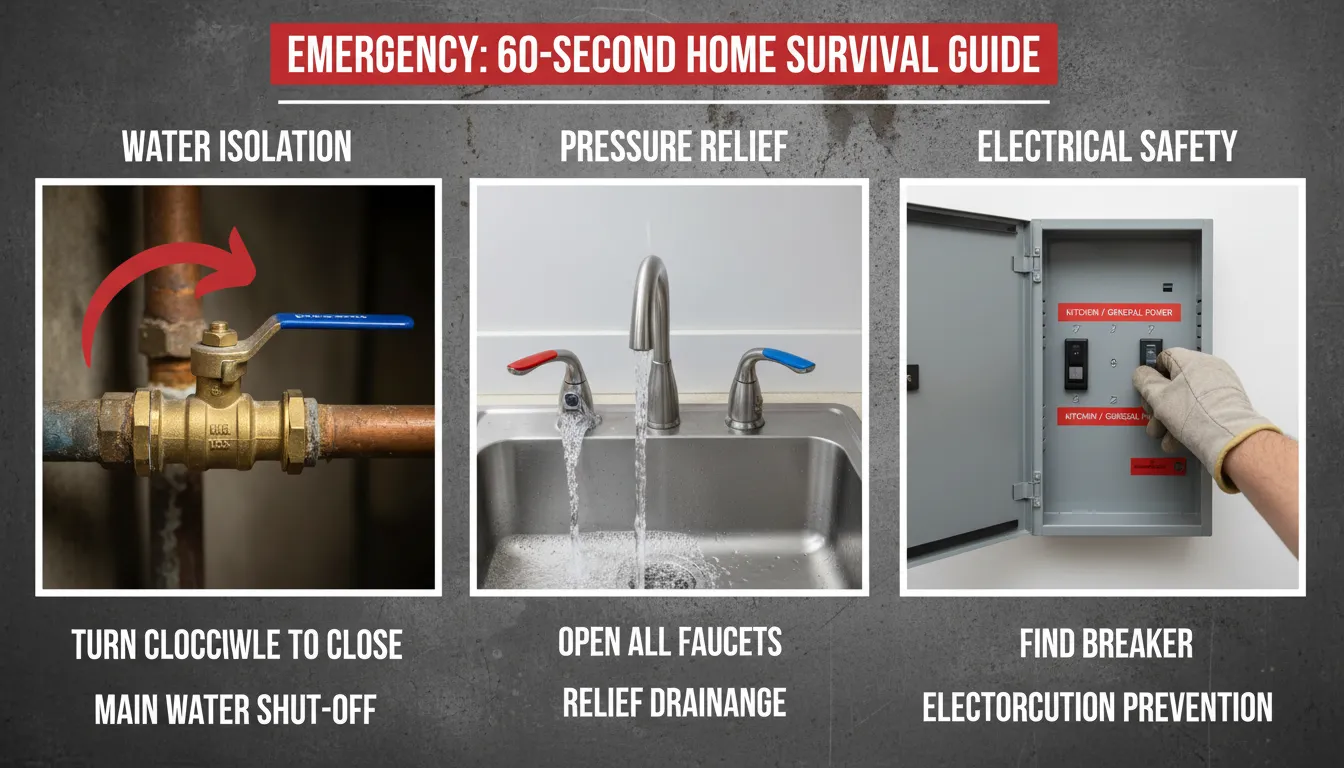
A fixture shutoff valve controls water to one appliance or fixture, such as a toilet, sink, washing machine, or water heater. The main shutoff valve stops water to the entire home. Every adult household member should know where the main shutoff is located before an emergency happens.
- Try the small shutoff valve near the leaking fixture first.
- If water continues flowing, the leak is hidden, or more than one area is affected, close the main water valve.
- Turn valves slowly. Do not force a valve that will not move.
- After shutting off the water, open a cold-water faucet to help relieve pressure in the plumbing.
- Confirm that water has stopped before beginning cleanup.
Sudden cold snaps remain a local concern even in a warm climate. The San Antonio Water System notes that ice can block plumbing and cause pipes to burst, and its winter pipe protection guidance advises homeowners to check multiple faucets when they suspect a frozen pipe.
Why Electrical Safety Comes First
Water near outlets, extension cords, appliances, or breaker panels can create a serious shock hazard. Never walk through standing water to unplug an appliance or reach an electrical panel. If the panel is dry, easily accessible, and outside the affected area, turning off the relevant circuit may be possible. If it is wet, blocked, or nearby water is rising, leave the space and seek qualified help.
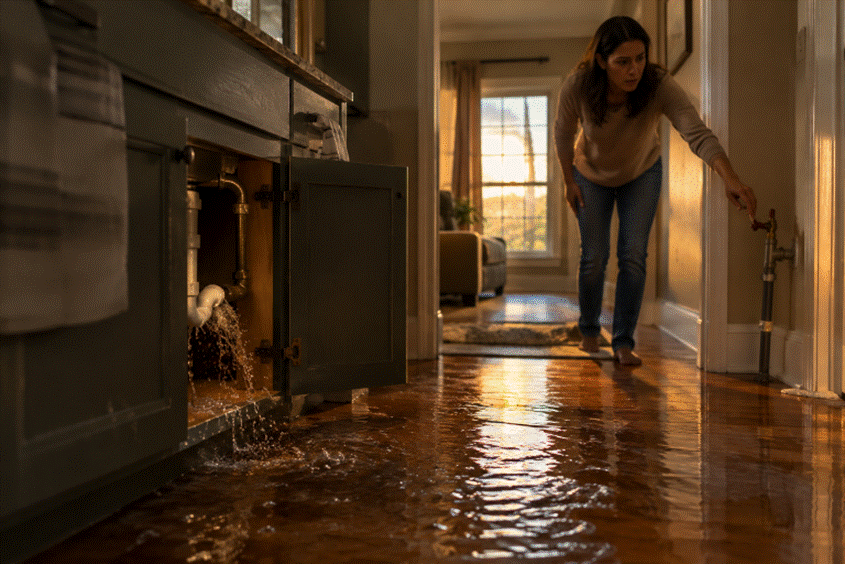
Never touch electrical equipment while standing in water. When there is any doubt about electrical safety, stay out of the area.
How to Limit Water Damage
Once the water is off and the area is safe, work to prevent additional damage. Move electronics, rugs, furniture, documents, and other valuables to a dry location when they can be handled safely. Use towels, mops, buckets, or a wet/dry vacuum only for clean water and only where electricity is not a concern.
- Catch minor drips with containers.
- Move items off wet floors and away from leaking ceilings.
- Open interior doors to improve airflow.
- Use fans or dehumidifiers only after confirming that electrical use is safe.
- Photograph damaged surfaces and belongings before throwing items away.
Do not treat sewage, drain backups, or outdoor floodwater like clean tap water. Avoid direct contact and arrange for appropriate cleanup when contamination may be involved.
When to Call a Plumbing Professional
Professional help is appropriate when water cannot be stopped, the pipe break is behind a wall or beneath a floor, the main shutoff will not close, or the leak has affected ceilings or multiple rooms. A temporary clamp or repair tape may slow a small leak, but it does not establish whether nearby pipe sections are weakened or whether water has reached hidden materials.
Situations That Usually Need Prompt Help
- A pipe is spraying or leaking inside a wall, ceiling, floor, or foundation area.
- The main water shutoff valve does not work.
- A ceiling is sagging, bulging, or actively dripping.
- Several fixtures lose water pressure at the same time.
- A water heater is leaking heavily.
- Sewage is present, or a drain backup is spreading.
- You smell gas near plumbing equipment.
Why Pipes Burst in San Antonio
Freezing temperatures are one possible cause, but they are not the only one. Pipes may also fail because of corrosion, aging connections, excessive water pressure, shifting soil, accidental damage during remodeling, or worn appliance supply hoses. In San Antonio, long hot periods, older plumbing materials, and abrupt temperature changes can all make routine inspection worthwhile.
What to Document for Insurance
Document the damage before cleanup changes the scene, as long as doing so does not create a safety risk. Insurance policies and claim procedures vary, so contact your insurer promptly and ask what information it needs.
- Take wide photos of every affected room.
- Capture close images of the broken pipe, fixture, appliance, or visible source.
- List damaged flooring, furniture, electronics, and personal belongings.
- Keep receipts for emergency supplies, temporary repairs, cleanup, and lodging.
- Do not discard majorly damaged items until your insurer provides direction, unless they present a safety or health concern.
How to Reduce Mold Risk
Drying should begin as soon as the water is controlled and the area is safe. Wet carpet, drywall, insulation, wood, and upholstered furniture can retain moisture after surface water is gone. The CDC recommends that homeowners clean and dry or remove wet items within 24 to 48 hours when possible to help prevent mold growth.
- Ventilate dry, safe areas when outdoor conditions allow.
- Use dehumidifiers and fans where electrical conditions are safe.
- Watch for damp flooring, water stains, discoloration, and musty odors.
- Seek remediation help if water has spread behind walls, below flooring, or into insulation.
How to Prepare Before an Emergency
Preparation can make a burst-pipe response less stressful. Label the main water shutoff, keep it accessible, and test it periodically if it can be done safely. Inspect visible pipes and supply hoses for corrosion, wear, or leaks, and consider placing leak sensors near water heaters, washing machines, sinks, and refrigerators with water lines.
Common Questions About Burst Pipes
Should the Water Heater Be Turned Off?
If the water heater is leaking or the home’s water supply is shut off, follow the manufacturer’s instructions for your unit. Do not touch gas controls, wiring, or electrical equipment if the surrounding area is wet.
Can a Burst Pipe Be Temporarily Patched?
A temporary repair may reduce a small, accessible leak after the water is shut off, but it is not a substitute for inspecting the damaged pipe and surrounding area.
When Is Cleanup Unsafe?
Stop cleanup when standing water is near electricity, a ceiling appears unstable, sewage is present, a gas odor is detected, or the damaged area cannot be safely entered.
Conclusion
A burst pipe calls for orderly action: protect people, shut off the water, avoid electrical hazards, document the damage, and get help when the situation exceeds a safe temporary response. Knowing where the shutoff valves are and keeping a basic emergency plan can help San Antonio homeowners respond with less confusion when water starts flowing unexpectedly.