


Today’s crimes are investigated by identifying individuals and analyzing the evidence collected from crime scenes.
Unlike in the past, investigators are no longer forced to sort through mounds of paperwork and manually compare evidence using magnifying glasses. Instead, they rely on the unique physical characteristics of an individual’s biological data and compare crime scene evidence to that found in large databases from all over the country. The use of an individual’s physical characteristics to identify him or her is an objective means of conducting an investigation in which the innocent are cleared of wrongdoing and the guilty are held accountable.
Each type of biometric has their own value in crime solving, mainly because they are accurate and fast. An examiner can become fatigued while manually comparing two sets of human hair, for example, and even become biased. The algorithms used in biometric matching, on the other hand, can process through mountains of data in a very short period of time, which makes them useful in many situations. For example, an examiner can gather evidence at a crime scene, then go back to the lab and use the software used in forensics to cross reference the evidence against huge databases holding information from all around the world, including from many international registries.
In order to conduct an investigation using biometric data there are a number of different types of biological data and each of these need to be handled in a number of different ways in order for an investigation to proceed.
Latent Prints
There are many different forms of physical evidence that can be found at scenes of crime. One of the most widely recognized is that of fingerprints. Fingerprints are the marks left on surfaces by the friction skin on an individual’s fingers and thumbs. These marks are typically transferred to surfaces by contact, and are often left in the form of sweat and oils from a person’s skin. There are many different techniques used to reveal latent prints found at scenes of crime, including fingerprint powders, alternative light sources and chemical processes that reveal the ridge detail of the friction skin. Often, however, latent prints are found in very poor condition and are often distorted or altered in some way. This can make the process of comparing these prints to known samples extremely difficult and can take hours of painstaking work. By utilizing biometrics in forensic analysis, latent prints can be compared using advanced algorithms that map out all of the minutest details of the print including the ridge endings and bifurcations. These computerized systems are able to identify a suspect’s prints from even the poorest of quality of prints that have been left at scenes of crime.
Facial Recognition
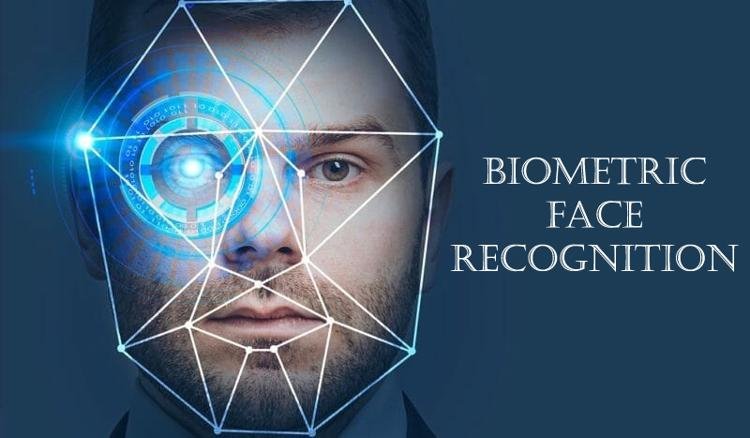
Today security cameras are as common as traffic speed cameras and mobile phones. The images from these cameras can be of great value to an investigation. Images of a crime scene can be matched with images of suspects in a database of facial recognition templates. The process of matching faces involves the faces being mapped to a mathematical template that describes the geometric features and the focal length of the face in the two dimensional image. The images used for matching faces can be from a number of different applications including the scanning of large crowds of people to search for a suspect, the tracking of a suspect using images from a number of cameras, and the identification of suspects from still images found on digital devices such as computers and mobile phones that have been seized from the homes and cars of suspects.
Iris and Voice Analysis
Other forms of Biometrics, including Iris scanning and Voice Analysis are being used in many investigations and for identification of individuals in various contexts. Typically, physical evidence is collected at a crime scene in the form of a physical item(s) and then compared to existing evidence collected from other individuals. For example, a Booking Photo which was taken when an individual was arrested can be used for Iris scanning to identify that individual at a later time and location. This type of identification is usually conducted at secure facilities such as prisons. In addition, Voice Analysis is also used in many cases, including extortion, kidnapping and wiretap cases where recordings of a voice message left for another individual can be measured and matched for physical characteristics of the speaker’s vocal tract and the various frequencies produced by that speaker when speaking.
The use of various types of biometric data can aid investigators in building a strong case with various pieces of physical evidence. One piece of physical evidence alone is generally not enough to prove “beyond a reasonable doubt” the identity of a criminal. However, with the aid of a partial fingerprint at a crime scene and a positive identification from a nearby security camera, investigators can establish strong evidence that lead to a positive identification of an individual. The continued evolution of matching biometric data will continue to play a key role in the collection and analysis of evidence in today’s criminal investigations.