


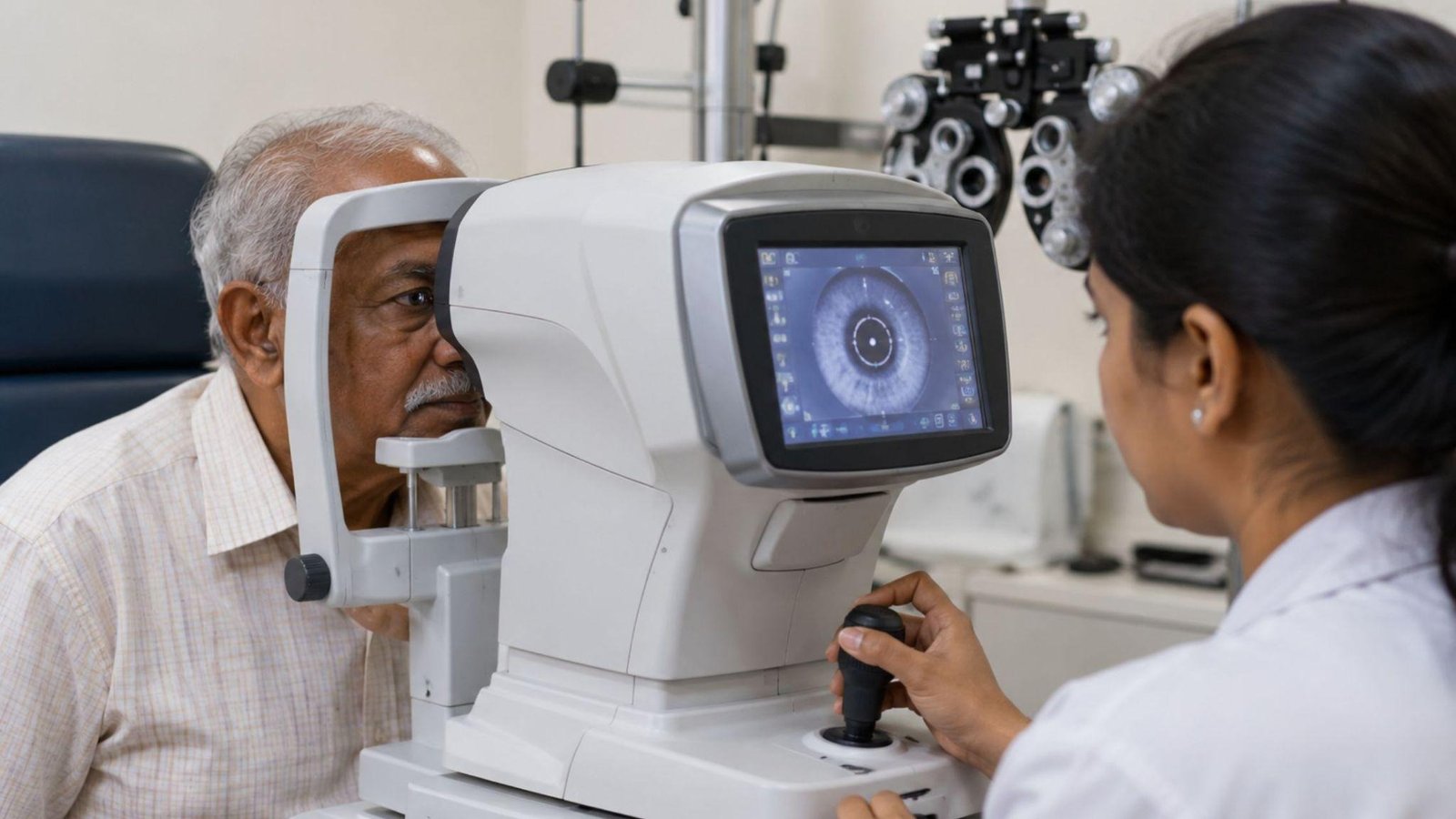
Detailed eye measurements are important before cataract surgery because they determine the power of the artificial lens placed inside your eye. Accurate readings help you get clear vision afterwards and can reduce how much you rely on glasses.
Many people in India think of the operation itself as the main event. Yet much of the outcome takes shape earlier, during the tests done at the planning stage.
What Gets Measured And Why
Before cataract surgery, your doctor builds a detailed picture of your eye. Each reading adds a piece to the puzzle.
- The length of the eye from front to back
- The curve of the cornea
- The depth of the space at the front of the eye
- The thickness and shape of the natural lens
- Signs of astigmatism
These details help work out a lens power for your cataract surgery that suits your eye, rather than relying on a general average.
How Measurements Guide Lens Choice
Lens implants used in cataract surgery come in different types and powers. Picking the right one depends heavily on how precise the readings are.
- Standard lenses for clear distance vision
- Toric lenses for astigmatism
- Options that help with both near and distance focus
- Lenses suited to your daily habits
If you’re planning cataract surgery at ASG Eye Hospital in India, ask the team to walk you through your measurement report so you understand which lens has been chosen and why.
Why Small Errors Matter
The eye is a tiny, precise structure. Even a slight mismatch in measurement can affect how sharply you see after cataract surgery.
- Vision may be clear but slightly out of focus
- You may need glasses more often than expected
- Further correction may sometimes be needed
That’s why doctors sometimes repeat tests before going ahead with cataract surgery.
Things That Can Affect Your Readings
Some factors can throw measurements off, so preparation before cataract surgery matters. Your doctor may ask you to take a few simple steps.
- Stopping contact lenses for a while before testing
- Treating dry eyes, which can distort corneal readings
- Mentioning any past LASIK or eye surgery
- Sharing health conditions such as diabetes
Being upfront about these helps the team plan your procedure with fewer surprises.
Measurements And The Surgical Technique
Accurate planning matters, no matter which technique you use. In phaco surgery, the cloudy lens is broken up and removed through a small opening before the new lens goes in.
- Precise readings help position the new lens correctly
- Corneal mapping guides where the openings are made
- Existing astigmatism can be considered during planning
Your surgeon will explain whether phaco surgery or another approach is suitable for your eyes.
Conclusion
The tests before cataract surgery may seem routine, but they shape the vision you’ll live with afterwards.
Ask questions, follow any instructions given before testing, and make sure you understand your lens choice.
Whether you’re having phaco surgery or another technique, careful measurements give you a strong start towards clearer vision.