


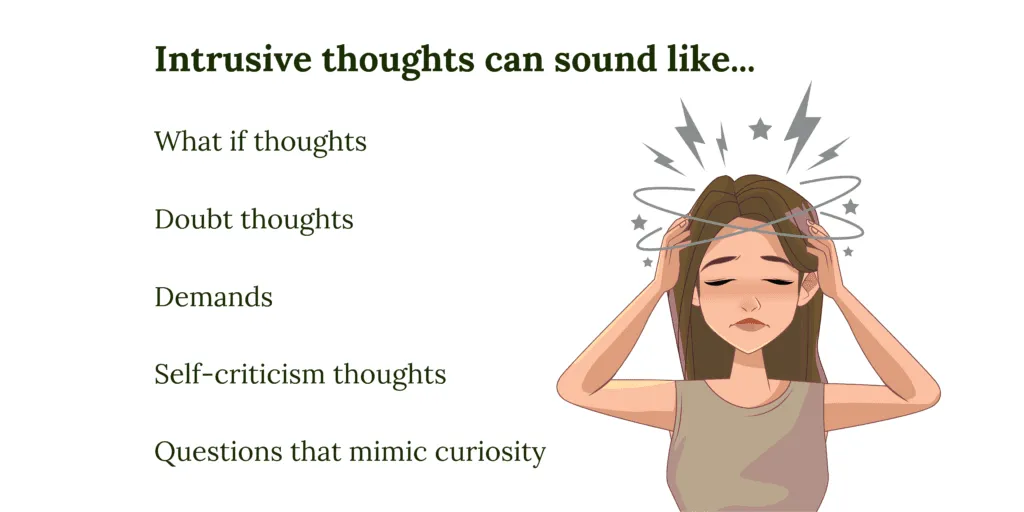
Recovery from persistent obsessive thoughts is often misunderstood as the moment when the mind becomes completely free of unwanted ideas. In practice, improvement can be more subtle and meaningful. A person may still notice intrusive thoughts but no longer feel obligated to solve them immediately. This perspective is especially important when considering when do obsessive thoughts stop (kada prestaju opsesivne misli) because recovery is generally measured by reduced interference rather than the total absence of thoughts.
What makes an obsessive thought different from an ordinary thought?
Everyone experiences thoughts that are unwanted or unusual. Obsessive thinking becomes more concerning when thoughts repeatedly return and create significant distress or lead to repetitive responses.
The person may recognize that the concern feels excessive yet still feel unable to leave it alone. This conflict can make obsessive thinking particularly tiring.
What happens as recovery develops?
One of the most important changes is often reduced urgency. A thought that once seemed to require an immediate answer may eventually be recognized without extensive investigation.
The person may also become better at separating thoughts from facts. Having a frightening thought does not automatically mean that the thought represents reality, intention, or prediction.
Can emotional reactions change before thoughts become less frequent?
Yes. Sometimes the thought continues to appear, but the emotional response becomes less intense. This can be a significant sign of progress.
For example, a person may notice a familiar intrusive concern and experience temporary discomfort without entering a prolonged cycle of checking, reassurance, or mental review. The thought may then lose momentum naturally.
Why is trying to suppress thoughts often unhelpful?
Attempts to force a thought out of awareness can increase monitoring for whether the thought has disappeared. That monitoring can keep attention attached to the unwanted idea.
A more flexible approach is often to acknowledge the thought and allow it to remain in the background without treating it as an emergency. Therapeutic guidance can help individuals develop this skill safely and consistently.
How does everyday functioning reflect recovery?
Daily functioning can provide valuable evidence of progress. Someone recovering may spend more time working, studying, socializing, exercising, relaxing, or pursuing personal interests instead of being occupied by mental rituals.
The thought itself may not have vanished, but its ability to interrupt ordinary life can decrease. This is an important distinction when evaluating recovery.
Can stress temporarily make symptoms stronger?
Yes. Changes in sleep, increased pressure, illness, relationship difficulties, or major transitions can make intrusive thinking more noticeable.
A temporary increase does not necessarily erase previous progress. Recovery skills can remain useful even when symptoms fluctuate.
What treatment approaches may help?
Professional treatment can provide structured methods for addressing obsessive thinking. Cognitive behavioral therapy is commonly used, and exposure-based approaches may be recommended when appropriate.
Treatment should be individualized because obsessive symptoms can differ considerably between people. A qualified professional can help determine the most suitable approach.
What should someone expect from recovery?
Recovery can involve learning to respond differently rather than waiting for the perfect mental state. Thoughts may come and go, but their importance can gradually decrease.
A useful long-term goal is greater freedom to choose actions based on personal values instead of reacting automatically to intrusive thoughts. With suitable support, persistence, and realistic expectations, recovery can mean having more space for ordinary life even when the mind occasionally produces unwanted content.
Persistent obsessive thoughts can make ordinary decisions feel complicated because the mind may repeatedly search for certainty, reassurance, or a sense of complete safety. Recovery is usually not defined by achieving perfect control over mental activity. Instead, it can involve learning to let thoughts exist without allowing them to dictate behavior. For people asking when do obsessive thoughts stop the more useful question may be how much influence those thoughts continue to have over everyday life.
Why can obsessive thoughts seem impossible to ignore?
Obsessive thoughts often become attention-grabbing because they are associated with fear, doubt, responsibility, or uncertainty. The mind may repeatedly return to the same topic in an attempt to reach a feeling of certainty.
Unfortunately, continued analysis can keep the concern active. Each attempt to obtain complete reassurance may lead to another question that needs an answer.
What is a meaningful sign of improvement?
A meaningful change can occur when the person begins to recognize that not every thought deserves investigation. The thought may still be uncomfortable, but the individual becomes less likely to check, analyze, or seek reassurance.
Over time, this can create more mental flexibility. Attention becomes easier to redirect toward work, relationships, hobbies, and other daily responsibilities.
Does recovery happen all at once?
Usually, recovery develops gradually. Some situations may become easier quickly, while other triggers can remain challenging.
Progress may include small changes such as delaying a compulsive response, accepting uncertainty for longer, or returning to an activity without resolving the intrusive thought. These changes can build into broader improvements.
What happens when an old obsession returns?
An old thought returning does not automatically mean that treatment has failed. Intrusive thoughts can reappear during stressful periods or when familiar triggers are encountered.
The difference may be in the response. Instead of treating the thought as a new crisis, a person can recognize the familiar pattern and apply the skills learned through treatment.
How important is tolerance of uncertainty?
Tolerance of uncertainty can be central to recovery for people whose obsessive thinking revolves around needing absolute reassurance. Everyday life rarely provides complete guarantees.
Learning to continue with normal activities despite unanswered questions can gradually reduce the need for repeated mental checking. This does not mean ignoring genuine concerns; it means learning to distinguish reasonable action from repetitive attempts to achieve impossible certainty.
Can recovery improve confidence?
It can. When a person repeatedly discovers that an intrusive thought can be present without requiring a ritual or immediate solution, confidence may grow.
The individual begins to trust their ability to experience discomfort and continue functioning. This can be more sustainable than trying to control every thought that enters awareness.
When should someone seek professional guidance?
Professional support is appropriate when obsessive thoughts cause substantial distress or interfere with relationships, work, education, sleep, or ordinary routines. A qualified mental health professional can evaluate symptoms and discuss evidence-based treatment options.
Self-help information can provide useful education, but persistent symptoms may require individualized care.
What is the broader meaning of recovery?
Recovery is best understood as increased freedom rather than perfect mental silence. A person can learn that thoughts are experiences produced by the mind, not instructions that must always be followed.
As obsessive thinking becomes less dominant, attention can return to meaningful activities and relationships. The ultimate goal is not to guarantee that unwanted thoughts will never appear again, but to reduce their ability to control everyday choices and emotional well-being.