

When parents buy new pajamas for a baby or toddler, the first impression often comes from the fabric’s feel, the fit, and the design. Those details matter, but they only tell part of the story. After several weeks of wear and repeated washing, everyday qualities become easier to judge. Parents begin to notice whether the garment keeps its shape, whether the openings remain comfortable, and whether the print still looks good after regular use Parents assessing PatPat bamboo pajamas over time should watch for changes in fit, seams, stretch, and fabric condition after regular washing..
Choosing bamboo pajamas involves more than deciding whether a garment looks appealing when it arrives. The actual experience depends on the fabric blend, construction, care routine, and how often the item is worn. Paying attention to these details helps families understand which pieces work well in their daily routine and when an item may need replacing.
How Fabric Feel Can Change After Repeated Washing
A garment may feel different after several wash cycles than it did straight out of the package. Washing, drying, detergent residue, and friction can all influence how a textile feels against the skin. Some changes are barely noticeable, while others may become more apparent if the wrong washing or drying method is used.
Parents may notice that a garment feels less smooth, becomes slightly stiffer, or develops a different texture over time. These changes do not necessarily mean the fabric is poor quality. They can result from care methods, the properties of the fibres, or ordinary wear. The useful question is whether the garment remains comfortable and suitable for its intended purpose.
It is also important not to assume that every fabric marketed as bamboo behaves identically. Different fibre blends and manufacturing methods can produce different results. A garment’s care label and product information offer a more reliable starting point than general claims about an entire fabric category.
Detergent and Water Temperature Make a Difference
Using more detergent than recommended does not automatically make clothes cleaner. Excess detergent may leave residue, particularly when the washing machine is overloaded or the rinse cycle is not effective. Following the detergent instructions and choosing a suitable cycle can help keep clothing clean without unnecessary product buildup.
Water temperature matters as well. Some garments can shrink, stretch, or lose aspects of their original appearance when washed outside the recommended conditions. Parents should follow the care label rather than assume that hot water is always the best option for heavily worn clothing.
If a garment begins to feel different, review the washing routine before deciding that it has reached the end of its useful life. Small adjustments to detergent quantity, load size, or drying methods may help prevent further changes, although existing damage cannot always be reversed.
What Parents Learn From Pajamas Worn Every Week
Regular use reveals details that may not be obvious during the first fitting. A toddler might pull at the sleeves, move around while playing, or wear the same outfit repeatedly between laundry days. These activities place different demands on clothing than occasional wear does.
Parents often become familiar with the areas that need the closest attention. Waistbands may stretch, cuffs may loosen, and seams may show signs of friction. The garment’s fit can also change as the child grows, even if the fabric itself remains in good condition.
Checking these areas periodically is a practical habit. It allows parents to notice minor wear before it becomes more serious and to determine whether an outfit remains comfortable. A garment that looks attractive but restricts movement or has damaged seams may no longer be suitable for everyday use.
Fit Is More Important Than Keeping the Same Size
Children can outgrow pajamas surprisingly quickly. An outfit that fitted comfortably at the beginning of the season may become tight around the shoulders, waist, or legs a few months later. This is a normal part of growth, not necessarily a sign that the garment has deteriorated.
Parents should look for pulling seams, tight openings, and sleeves or legs that have become too short. Clothing should allow normal movement without pressing uncomfortably against the body. If the garment is designed to fit snugly, follow its sizing guidance rather than choosing a much larger size to extend its use.
The right fit also depends on the garment’s intended purpose. Daytime clothing and sleepwear may have different design requirements, so parents should not assume that a loose fit is always preferable. Product instructions can help clarify how an individual item is intended to be worn.
Printed Designs and Colours Under Everyday Conditions
Prints and colours are often among the first features parents notice when buying children’s pajamas. After repeated washing, the design may become a useful indicator of how the garment is holding up. Fading, cracking, peeling, or uneven changes in appearance can occur depending on the printing method, fabric construction, and care routine.
Not every slight change in colour means that an item has become unusable. However, a print that begins to peel or a decoration that becomes loose deserves attention, particularly on clothing worn by young children. Parents should inspect printed areas and remove garments from use if a damaged detail creates a potential safety concern.
Turning garments inside out before washing, when permitted by the care label, may reduce direct friction on printed surfaces. It is also sensible to avoid harsh stain treatments unless they are suitable for the material and design. These steps cannot guarantee that a print will remain unchanged, but they can help reduce unnecessary wear.
A Light-Blue Two-Piece Set in a Realistic Wardrobe
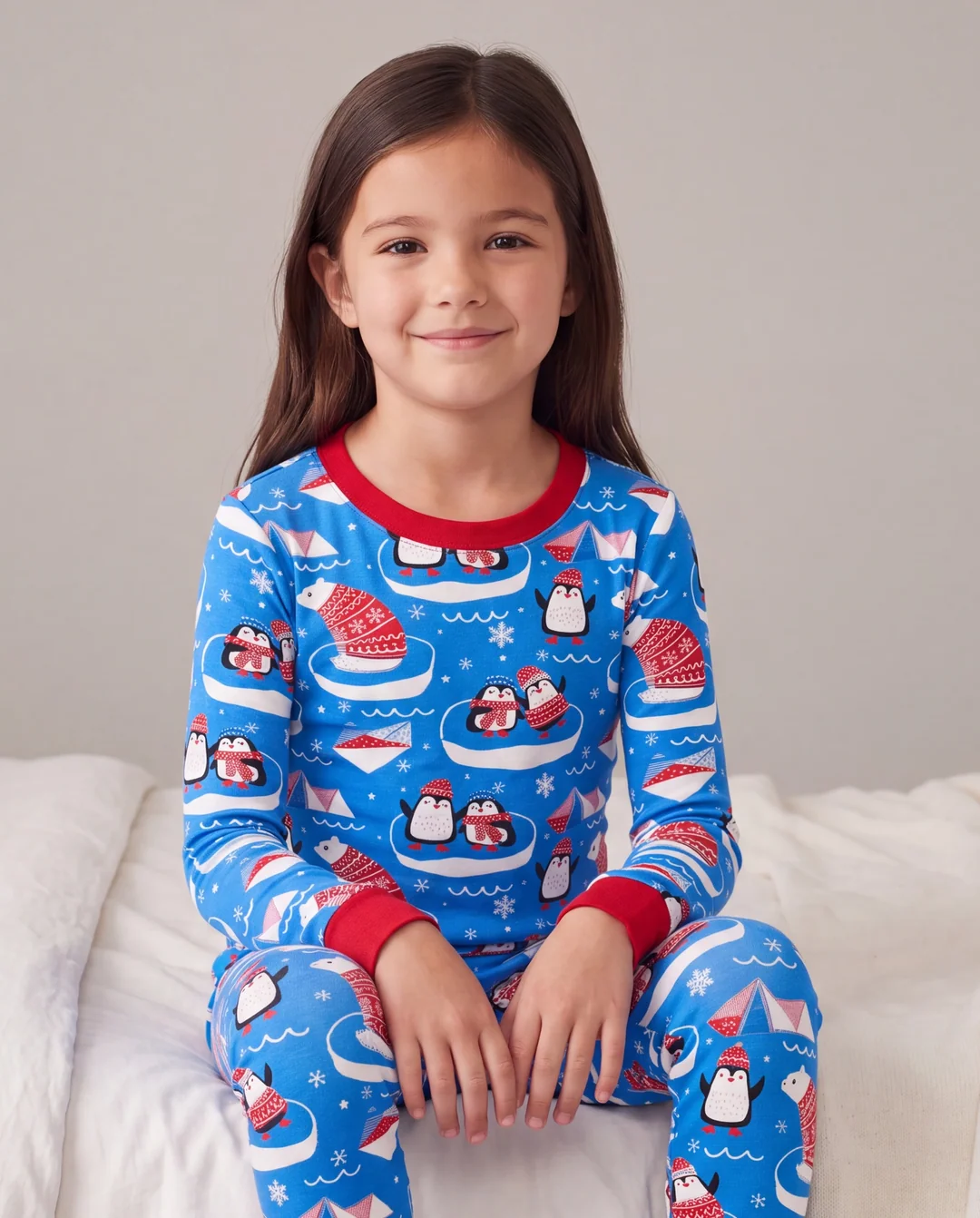
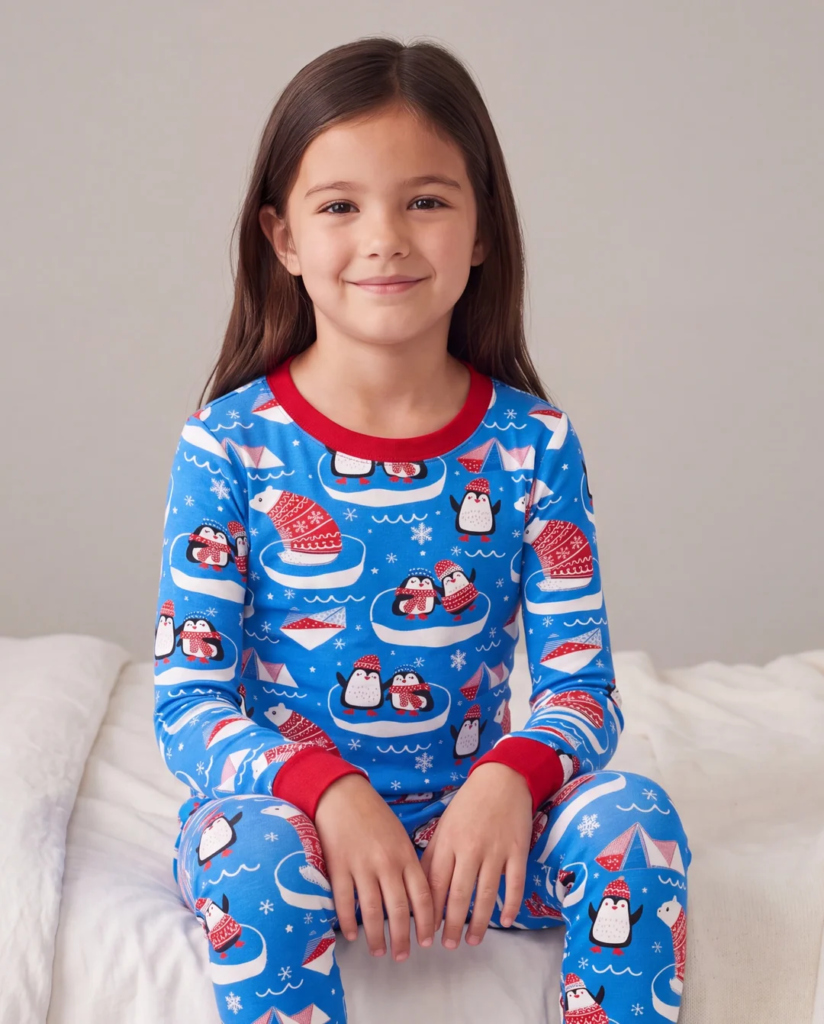
A light-blue printed pajama set illustrates why appearance and everyday performance should be considered separately. The Light Blue Christmas and Halloween 2-Piece Bamboo Pajama Set with Playful Print for Toddlers and Kids features a playful design and a snug-fitting, two-piece style. Its colour may suit parents looking for a distinctive addition to a child’s sleepwear collection, while the separate top and bottoms make fit checks straightforward.
After repeated use, parents can inspect the sleeves, leg openings, waistband, and seams to see whether both pieces remain comfortable. The printed areas should also be checked for visible wear. Following the product’s current care instructions is important, as the actual fibre blend and construction determine which washing and drying methods are appropriate.
The set’s appearance does not establish how warm it will feel in every room or how long it will last. Those factors depend on the garment itself, the care routine, and the conditions in which it is worn. Parents should use the product information to understand its intended fit and care requirements rather than treating colour or fabric category as a guarantee of performance.
How Bamboo Baby Pajamas Fit Into Everyday Routines
The term bamboo baby pajamas covers a category of sleepwear, but individual garments can differ in thickness, fibre blend, construction, and intended fit. Parents comparing options should look beyond the name and consider how a particular item fits into their child’s routine.
For families who do laundry frequently, care instructions can be especially important. A garment that needs a specific drying method may require more attention than one suited to the family’s usual laundry routine. This does not automatically make either option better; it simply means that practical care needs should be considered before buying.
Frequency of wear also affects how parents assess value. An outfit worn several times a week will naturally experience more washing and movement than one reserved for occasional use. Rather than expecting a garment to remain unchanged indefinitely, parents can monitor its condition and decide whether it continues to meet their needs.
Washing Habits That Help Clothes Stay in Good Condition
A few consistent habits can make garment care more manageable. Parents do not need an elaborate laundry process, but they should follow the care label and avoid methods that create unnecessary stress on the fabric.
Sort clothing according to colour and washing requirements. Treat stains promptly with a method suitable for the garment, and avoid aggressive scrubbing that could damage a print or surface. Do not overload the washing machine, because garments need room to move and rinse properly.
Drying deserves equal attention. If air-drying is recommended, spread the garment out so air can circulate. If tumble-drying is allowed, use the suggested setting instead of assuming that high heat will save time without consequences. Make sure clothing is completely dry before folding it away, as trapped moisture can cause unpleasant smells.
These habits are useful for many types of children’s clothing, not only garments described as bamboo. The specific instructions on each item should take priority over broad assumptions about fabric care.
When Ordinary Wear Becomes a Reason to Replace Pajamas
Some changes are part of normal use, while others indicate that an item should no longer be worn. Slight fading or a small difference in texture may not affect the garment’s function. Holes, damaged seams, loose fastenings, and stretched openings that no longer fit properly are more important concerns.
Parents should check clothing regularly rather than waiting until a problem becomes obvious. Pay attention to areas that experience repeated movement, such as the knees, elbows, cuffs, and waist. For sleepwear, also confirm that the garment still fits according to its intended design and that any damage does not create a safety concern.
A child who has outgrown a garment may need a replacement even when the fabric looks almost new. Likewise, an older outfit that remains comfortable and structurally sound may still be useful if it fits correctly and is suitable for its intended use. Condition and fit are more informative than age alone.
Keep Expectations Realistic When Choosing Children’s Sleepwear
No fabric or garment can be expected to remain exactly the same after unlimited wear and washing. The lifespan of pajamas depends on several factors, including construction, frequency of use, washing methods, drying conditions, and how quickly a child grows. Product descriptions can provide useful information, but they cannot predict every family’s experience.
Parents can make more informed choices by checking sizing details, reading care instructions, and inspecting garments after washing. It is also helpful to distinguish between a change in appearance and a genuine problem with comfort or safety. A faded print may be mostly cosmetic, while a tight waistband or damaged seam can affect whether the item remains suitable.
The most useful approach is to judge each garment on its own merits. Instead of relying entirely on marketing claims or assumptions about a fabric category, observe how the clothing performs in everyday life and respond when its condition changes.
Make Regular Checks Part of the Clothing Routine
Parents do not need to examine every garment after every wear, but a quick check during laundry or folding can reveal useful signs of wear. Look for changes in fit, loose threads, damaged prints, and areas that seem thinner than before. These small observations help families decide which pieces are still comfortable and which should be set aside.
Caring for pajamas is ultimately a combination of suitable washing, proper drying, regular fit checks, and realistic expectations. A garment’s first impression may be appealing, but its everyday usefulness becomes clearer over time. By paying attention to how clothing changes through regular use, parents can build a practical wardrobe that supports their child’s routine without expecting every item to last forever.