


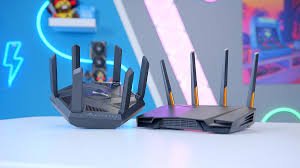
Dual-band routers have become a staple for individuals seeking a reliable and fast internet connection. These devices offer significant advantages over their single-band predecessors by utilizing two distinct frequency bands: 2.4 GHz and 5 GHz.
Understanding the difference between 2.4 GHz and 5 GHz and how they affect your internet experience is crucial. Actually, dual-band routers are excellent experimentation platforms for those looking to optimize their network performance.
This article aims to explain the technology behind dual-band routers and expand on their benefits and optimal use cases.
The Basics of Dual-Band Technology
Dual-band routers are designed to broadcast Wi-Fi signals on two frequency bands: the 2.4 GHz and 5 GHz bands. The primary difference between these bands is speed, range, and bandwidth.
The 2.4 GHz band is the more commonly used frequency, offering better coverage at a longer range. But, it’s trade-offs are slower speeds and more susceptibility to interference from other household devices like microwaves, cordless phones, and other transmission-emitting devices.
On the other hand, the 5 GHz band provides faster data rates at shorter distances. It is less prone to interference, making it ideal for high-bandwidth applications such as video streaming and online gaming.
Understanding the Difference Between 2.4 GHz and 5 GHz
Choosing between 2.4 GHz and 5 GHz can significantly impact your online activities. For instance, if you live in a densely populated area, the 2.4 GHz band might be congested, leading to sluggish speeds, dropped connections, and frustrated users.
Although the 5GHz band does not penetrate walls as effectively as the 2.4 GHz band, it offers cleaner and faster connections in environments where many devices are connected simultaneously.
Speed and Range
One key benefit of 5 GHz is its ability to support higher data rates. While the 2.4 GHz band typically provides speeds up to 600 Mbps, the 5 GHz band can deliver speeds up to 1300 Mbps under ideal conditions. This is due to the wider channels available on the 5 GHz band, which allow for more data to pass through simultaneously.
Interference and Congestion
The 2.4 GHz band operates on limited channels, which means it can quickly become congested, especially in areas with many Wi-Fi networks.
Unfortunately, this congestion can cause significant interference and degrade network performance. In contrast, the 5 GHz band has more channels and is less used, leading to a cleaner connection with less interference.
Dual-Band Routers as Experimentation Platforms
Dual-band routers serve as ideal experimentation platforms for tech enthusiasts and professionals. They allow users to test different network setups and configurations to determine the optimal setup for their specific needs.
Users can significantly enhance their network’s efficiency and reliability by experimenting with band steering, channel selection, and other router settings.
Band Steering
Many dual-band routers come equipped with band steering. This technology automatically directs devices to the most appropriate frequency band based on current network conditions and the device’s capabilities. For example, older devices that support only 2.4 GHz will be connected to that original band, while newer, more robust devices will be directed to the 5 GHz band for faster speeds.
Channel Optimization
Experimentation can yield amazing benefits in channel optimization. Users can reduce interference and boost performance by selecting the least congested channels on each band. Channel Optimization is particularly useful in the 5 GHz band, where the increased number of available channels provides more options for avoiding interference.
Conclusion
Understanding the technology behind dual-band routers and the differences between 2.4 GHz and 5 GHz can significantly enhance your internet speed. These devices provide flexibility for network management and robust experimentation platforms for those aiming to optimize their home or office networks.
Whether you are a casual user or a tech enthusiast, investing in a dual-band router can significantly improve your network’s performance and reliability, ensuring a smoother and more efficient online experience.