

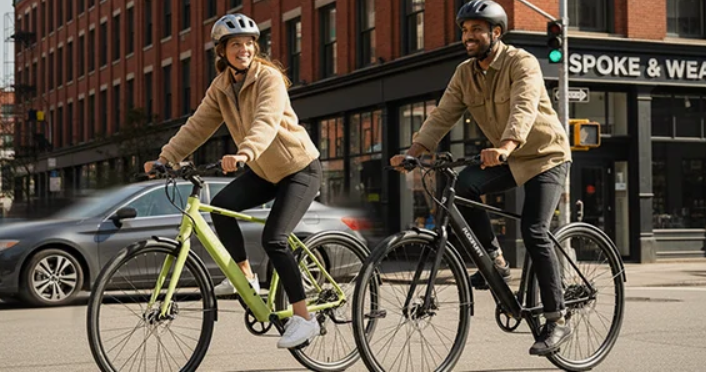
An affordable e-bike should do more than meet a low price point. For most adults, good value means getting enough range for regular trips, predictable motor assistance, reliable braking and a frame that is comfortable enough to use several times a week.
That distinction matters because an inexpensive e-bike that feels awkward, runs short on battery or does not fit the rider’s normal routes can quickly become an expensive object sitting in the garage.
The better approach is to start with everyday use.
How far will the bike travel? Are there hills? Will it be stored upstairs? Does the rider need to stop frequently in traffic? Will it carry groceries? Once those questions are answered, it becomes easier to separate useful features from impressive specifications that may never matter.
What Does “Affordable” Really Mean for an E-Bike?
Affordable should mean appropriate for the budget and useful enough to justify the purchase.
The lowest upfront price does not automatically provide the best value. A bike used for commuting five days a week needs to handle different demands from one used for an occasional Sunday ride.
Start by identifying the trips the bike could realistically replace.
Someone riding three miles to work may not need the largest battery available. A rider covering 15 miles each way should pay much more attention to range and charging convenience.
The same principle applies to components. Premium suspension may be unnecessary on smooth city streets, while dependable brakes and a comfortable riding position can matter every day.
A good budget decision therefore comes from matching features to routine rather than buying the longest specification list available.
How Much Battery Range Does an Adult Really Need?
Most riders need enough range to complete their normal round trip with a reasonable reserve.
If the daily commute is 12 miles total, there is little reason to shop only by the largest possible range figure. On the other hand, a rider who combines commuting, errands and longer weekend rides may benefit from additional battery capacity.
Published range should also be treated as a reference rather than an automatic result.
Temperature, rider and cargo weight, tire pressure, frequent starts and stops, terrain and riding style can all affect how far an e-bike travels on a charge. Bosch identifies these among the factors that influence real-world e-bike range.
Higher levels of motor assistance also use more battery energy.
For everyday buyers, the practical question is simple: can the bike comfortably handle the most common ride without making battery level the main thing the rider thinks about?
That is more useful than chasing a maximum range number that may rarely be needed.
Does a Bigger Motor Always Mean a Better E-Bike?
No. Motor power should match the riding conditions.
More power can be useful for hills, heavier loads and quicker acceleration from a stop. But motor output alone does not tell buyers how smooth the assistance feels or how efficiently the bike uses its battery.
Rated power and peak power also describe different things. Rated output represents power that can be provided continuously, while peak output describes higher power available for shorter periods under suitable conditions.
For city riding, controllability matters.
A rider pulling away from a traffic light may appreciate strong assistance, but the power should arrive predictably rather than making the bike difficult to manage.
This is one reason sensor type deserves attention.
A cadence sensor generally responds to whether the pedals are turning, while a torque sensor responds to how much effort the rider is applying. Systems that use torque sensing can make assistance feel more closely connected to the rider’s own pedaling.
For adults riding through frequent stops, turns and changing traffic conditions, smooth power delivery can be more valuable than an unusually large peak-power number.
What Makes an E-Bike Comfortable for Daily Commuting?
Comfort starts with fit and riding position.
An electric commuter bike should allow the rider to reach the handlebars naturally, adjust the saddle to an appropriate height and remain comfortable during repeated stops and longer rides.
Frame style matters here.
Step-through frames lower the point riders need to step over when getting on and off the bike. That can be useful for frequent city stops, riders carrying something on a rear rack or anyone who simply prefers easier mounting.
Handlebar adjustment can also make a noticeable difference. A slightly more upright position may suit relaxed urban riding, while other riders prefer a more forward position.
Suspension deserves the same practical treatment.
A front suspension fork can take some of the sharpness out of potholes, patched roads and uneven pavement. Full suspension may be unnecessary if the bike rarely leaves reasonably maintained streets.
Buy the comfort features the route actually requires.
Which Brakes Should Buyers Pay Attention To?
Brakes deserve more attention than many headline specifications.
E-bikes tend to carry more weight than conventional bicycles because of the motor and battery. Add a rider, backpack or groceries, and the braking system has a meaningful amount of mass to control.
Hydraulic disc brakes are common on many current e-bikes because they can provide strong, progressive braking with relatively manageable lever effort.
That does not mean equipment eliminates the need for careful riding.
Wet pavement, loose surfaces and worn tires can reduce traction. Riders still need space to stop and should adjust speed to conditions.
When comparing affordable models, reliable braking is one area where saving a small amount of money should not be the main priority.
Do Tires Need to Be Wide for Everyday Riding?
Not necessarily.
Tire choice should reflect the surface.
Fat tires can be useful for riders who regularly encounter loose gravel, sand, rough paths or other mixed terrain. But they also make a bike wider and can add weight and rolling resistance.
For urban riders spending most of their time on pavement, moderately sized tires can provide a useful balance between comfort, efficiency and maneuverability.
That difference becomes particularly noticeable when storing the bike in a small space or navigating crowded streets.
More tire is not automatically more bike.
The right tire is the one that suits the places the bike will actually go.
What Does Good Value Look Like for a City Rider?
A useful city bike combines sufficient range, manageable power and everyday comfort rather than maximizing one specification.
The Puckipuppy Poodle Pro is one example of that approach. Designed as an electric city bike, it uses a step-through frame with a 750W rated motor, a 48V 15Ah removable battery and torque-plus-cadence sensing. Puckipuppy currently lists a maximum range of 75 miles, with technical specifications showing a 45-to-75-mile range depending on riding conditions.
Those specifications make more sense when viewed through everyday use rather than performance alone.
The step-through frame helps with frequent mounting and dismounting, while the dual-sensor setup is intended to make pedal assistance smoother during starts, slowdowns and changing city speeds. The bike also uses hydraulic disc brakes, an 8-speed Shimano drivetrain and an 80mm adjustable front suspension fork.
It is still important to look at the trade-offs. The Poodle Pro weighs 63.1 pounds and has a maximum load capacity of 350 pounds, figures buyers should consider if stairs, transport or cargo are part of the routine.
The point is not that every commuter needs the same setup. It is that useful specifications should solve actual daily problems.
How Important Is a Removable Battery?
For many commuters, a removable battery is one of the most practical features on the bike.
Not everyone can park next to an electrical outlet.
Someone storing an e-bike in an apartment garage may prefer to remove the battery and charge it indoors. The same applies at work if secure bike parking is separate from charging access.
Removable batteries can also make certain storage routines easier, although riders should always follow the manufacturer’s handling and charging instructions.
Before buying, think about where charging will happen.
A theoretically long-range battery is less convenient if the bike must be moved across the house every time it needs power.
Small logistical details often determine whether an e-bike fits naturally into daily life.
How Much Does Bike Weight Matter?
More than many first-time buyers expect.
Weight may barely register while the motor is assisting the ride. It becomes obvious when the bike has to be lifted onto a rack, carried up steps or moved through a narrow storage area.
Batteries, motors and suspension all add weight.
This does not mean adults should always buy the lightest e-bike available. A heavier model may provide the battery capacity, stability or load rating required for a particular use.
The important part is knowing where the bike will live.
A 65-pound e-bike stored in a ground-floor garage creates a very different ownership experience from the same bike carried up two flights of stairs every evening.
Buyers should check total bike weight before ordering rather than discovering it when the delivery box arrives.
Is a Higher Top Speed Worth Paying For?
Only when the riding environment allows the extra capability to be useful.
A rider traveling longer suburban stretches may value higher pedal-assist speeds. Someone riding mostly through crowded downtown streets may spend much of the trip stopping for traffic lights and intersections.
Higher speed also changes energy use. Bosch notes that faster riding requires disproportionately more power to maintain speed.
Local rules matter as well.
E-bike classifications and access rules vary by location, so riders should understand how the bike is configured and where it can legally be used before making top speed a purchasing priority.
For most buyers, smooth assistance across normal riding speeds matters more frequently than the maximum number shown on the display.
What Features Are Worth Paying More For?
Spend more where the feature solves a problem that occurs regularly.
A longer battery range is valuable for a long commuter. A step-through frame matters for someone making frequent stops. Better brakes matter whenever speed, weight or traffic increases. Adjustable handlebars may be valuable to someone who struggles to find a comfortable riding posture.
Features become poor value when they solve situations the rider rarely encounters.
A complicated suspension system provides little return on perfectly smooth urban routes. Oversized tires may be unnecessary for someone who never leaves pavement. An enormous battery may add cost and weight to a bike that travels six miles a day.
Good value comes from selective spending.
That is especially important in the affordable category, where every additional feature should have a reason to be there.
What Should Adults Check Before Buying?
Start with the route, not the product page.
Estimate the normal round-trip distance. Note the steepest hills. Think about where the bike will be parked and charged. Decide whether groceries, work bags or other cargo need to come along.
Then check rider fit, battery range, motor behavior, braking system, bike weight and maximum load.
After those basics are covered, compare the extras.
An affordable e-bike does not need to be the cheapest option on the market, nor does it need every premium feature. It needs to make the trips that matter easier without introducing new problems every time it leaves the garage.
For most adults, that is what good value really looks like.